






















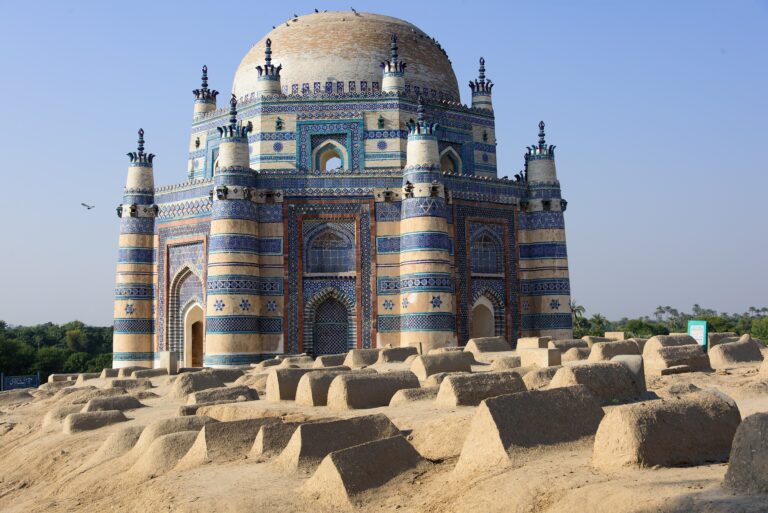

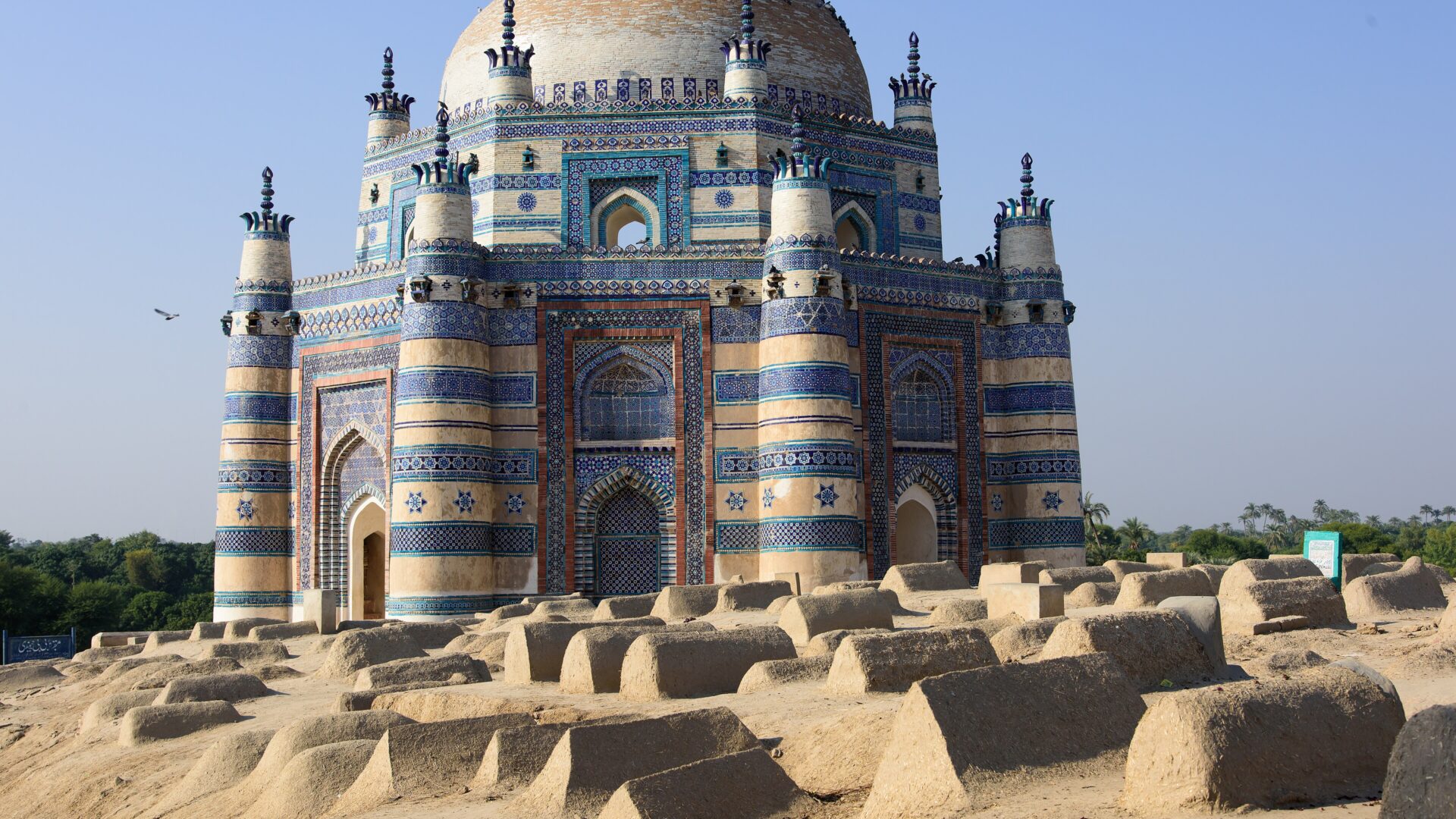
Uch Sharif is a historic town in southern Punjab, known for its blue-tiled tombs and shrines rising from the plains near the Cholistan Desert. It was for centuries a centre of Islamic learning and Sufism, and its monuments are among the finest examples of the tilework tradition of the Multan region.
This guide covers its history, the main monuments, how to reach it from Bahawalpur and what to check before you visit.
Quick Answer
Uch Sharif (also called Uch) is about 84 km from Bahawalpur, in Punjab, on an alluvial plain south of the Chenab River. Its best-known monuments are the tomb of Baha al-Halim, the tomb of Bibi Jawindi and the tomb of Nuriya, an architect, which together form the Uch Monument Complex. The complex is on UNESCO’s Tentative List. Visitor hours and ticket details could not be confirmed, so check locally.
Quick Facts
| Location | About 84 km from Bahawalpur, Punjab |
| Setting | South of the Chenab River, near the Cholistan Desert, about 113 m |
| Key monuments | Tombs of Baha al-Halim, Bibi Jawindi and Nuriya |
| Style | Southern Punjab tilework, linked to Multan |
| Heritage status | UNESCO Tentative List |
| Hours and fees | Not confirmed; check locally |
History
Uch has a long history. Alexander Cunningham, a nineteenth-century archaeologist, argued that Alexander the Great founded a town here. Muhammad bin Qasim conquered the area in 712 CE, and it passed through many rulers, including the Delhi Sultanate, the Langah and Arghun dynasties, the Mughals and later the princely state of Bahawalpur, before merging into Pakistan in 1955.
It grew into a major centre of scholarship and Sufism. The Qadiriyya order was established here in the mid-1400s, and the poet Bulleh Shah is said to have been born here in 1680.
The Monuments
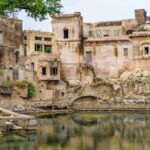
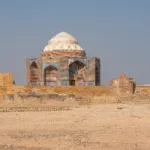
The Uch Monument Complex includes three well-known shrines built over about 200 years, in a landscape of roughly 1,400 graves.
- Tomb of Baha al-Halim. One of the main tombs of the complex.
- Tomb of Bibi Jawindi. A tiled tomb from the late 15th century. Sources give 1493 or 1494.
- Tomb of Nuriya. The tomb of the architect.
Preservation
Flooding in the early nineteenth century damaged many tombs. The World Monuments Fund listed the complex in 1998, 2000 and 2002, and American Express funded some conservation. In 2018, the World Bank approved a loan to the Punjab government to restore historic monuments, which included the Tomb of Bibi Jawindi. Condition varies, so check what is open before you go.
How to Reach Uch Sharif
Uch is about 84 km from Bahawalpur. Our Bahawalpur guide is a good base for planning, and the Punjab travel guide covers regional routes. Ask your hotel about transport and road conditions.
Visitor Tips
- Dress modestly, since these are shrines with active visitors.
- Remove shoes where requested.
- Avoid the hottest summer months and go from roughly October to March.
- Hire a local guide who can explain the tombs and the saints associated with them.
FAQs
Where is Uch Sharif?
About 84 km from Bahawalpur, in southern Punjab.
What is Uch known for?
Its tiled tombs, Sufi heritage and the Uch Monument Complex.
Is it a UNESCO site?
It is on UNESCO’s Tentative List, not inscribed.
Is there an entry fee?
Not confirmed. Ask locally.
Conclusion
Uch Sharif is a rewarding trip for anyone interested in Sufi heritage and tilework. Plan it from Bahawalpur, keep expectations realistic about condition and facilities, and confirm access before you set out.