

















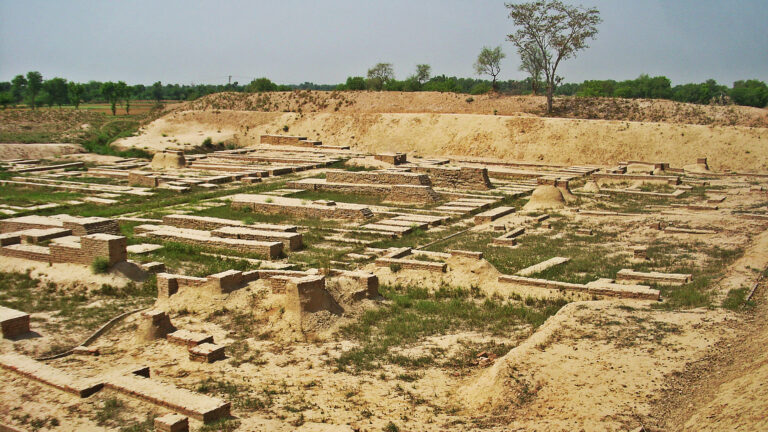

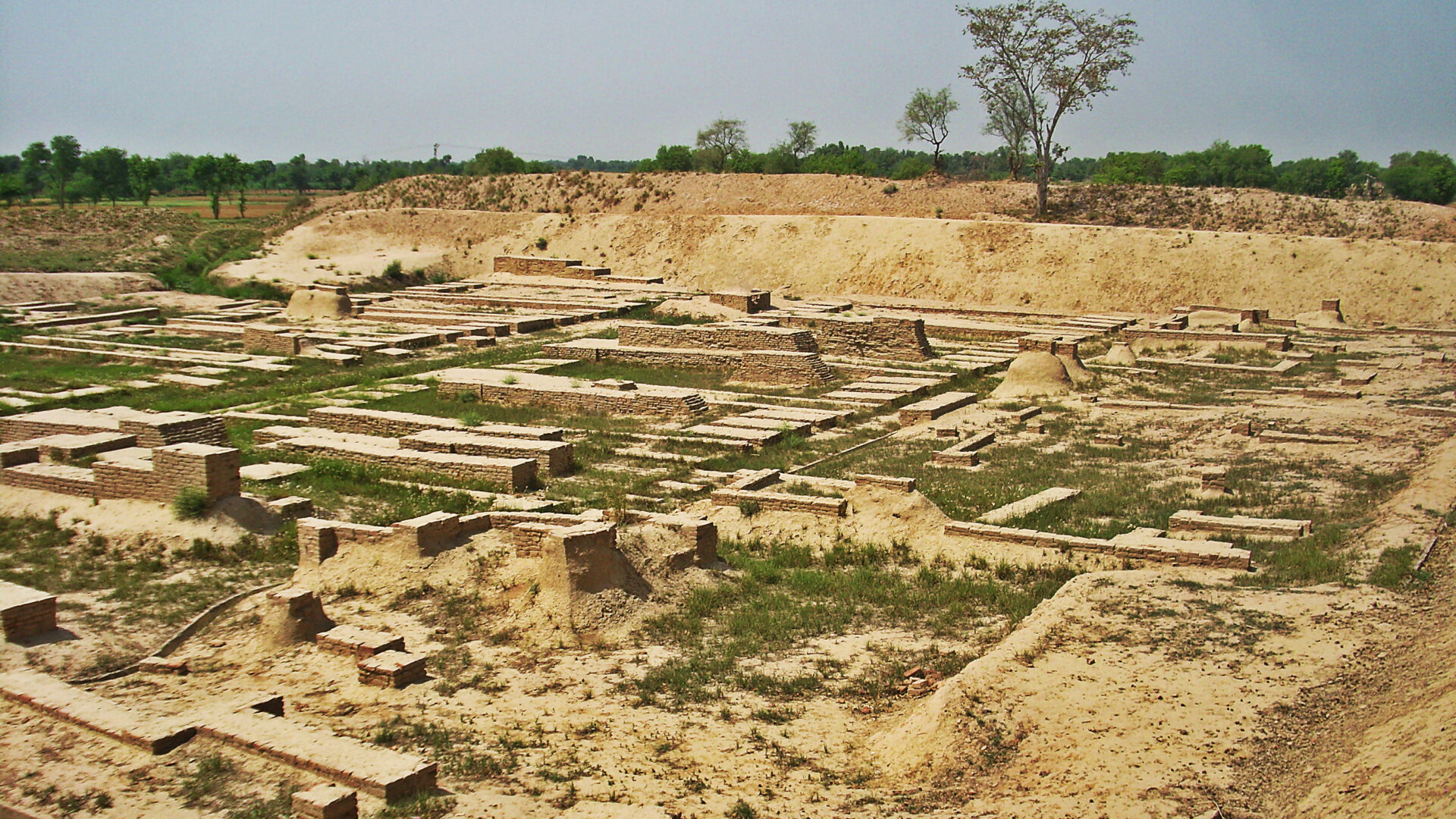
Harappa is the site that gave the Indus Valley Civilisation its other name, the Harappan civilisation. Today it is a field of brick mounds in Punjab, quiet and low-key, but it was once a city of thousands and one of the great urban centres of the ancient world.
This guide explains what Harappa was, what remains to be seen, and what to check before you plan the trip.
Quick Answer
Harappa is in Sahiwal District, Punjab, about 24 km west of Sahiwal city. Occupation spans roughly 3300 to 1300 BC, and the city was at its largest during the Mature Harappan phase, around 2600 to 1900 BC, when it covered about 150 hectares. The site is publicly owned and managed by the Government of Punjab through the Directorate General of Archaeology. It is open to the public, but opening hours and tickets could not be confirmed, so check before you travel.
Quick Facts
| Location | Sahiwal District, Punjab, about 24 km west of Sahiwal |
| Occupation | About 3300 to 1300 BC |
| Mature Harappan phase | About 2600 to 1900 BC |
| Size at its height | About 150 hectares; up to around 23,500 residents |
| Heritage status | On UNESCO’s Tentative List since 2004 |
| Managed by | Government of Punjab, Directorate General of Archaeology |
What Harappa Was
Harappa grew from earlier settlements into a large city of the Indus Valley Civilisation. At its height it may have housed up to around 23,500 people. The Ravi River once ran past the site, though it now flows about 8 km to the north.
Harappa was the first Indus Valley site to be excavated by the Archaeological Survey of India under British rule, although its full significance was understood only after Mohenjo-daro was discovered in 1922. Our Mohenjo-daro guide covers its sister city in Sindh.
Damage to the Site
Harappa suffered badly in the nineteenth century. In 1857, engineers building the Lahore to Multan railway took bricks from the ruins to use as track ballast. In 2005, plans for an amusement park were abandoned after builders found artefacts. These episodes explain why less is visible today than the city’s importance might suggest.
What You Can See
- Mound AB and Mound E. These are the main early settlement areas.
- The Granary and Great Hall. Structures associated with the city are shown at the site.
- Area G. An ossuary southeast of the city walls, noted for skeletal remains.
- The Harappa Museum. A museum is mentioned in reference sources, but details of its displays and hours could not be confirmed here.
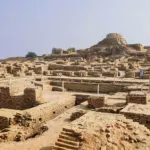
The site is described as ruined, so go with realistic expectations. It is a place for imagination and context rather than standing monuments.
How to Reach Harappa
Harappa lies about 24 km west of Sahiwal. Road and rail links connect Sahiwal with Lahore and Multan, and our Punjab travel guide outlines the main routes. Ask your hotel or driver about the best route and travel time, because a reliable distance from Lahore was not available for this guide.
Tickets and Hours
Opening hours and ticket prices could not be confirmed from a reliable source. Contact the Punjab Directorate General of Archaeology or ask a local operator before visiting.
Visitor Tips
- Wear sun protection and carry water, since the mounds are open and exposed.
- Go in the cooler months, roughly October to March.
- Stay on marked paths and do not remove bricks or fragments.
- Read about the civilisation beforehand, as there is little on-site interpretation to rely on.
FAQs
Where is Harappa?
In Sahiwal District, Punjab, about 24 km west of Sahiwal.
How old is Harappa?
Occupation spans roughly 3300 to 1300 BC, with the city at its largest around 2600 to 1900 BC.
Is Harappa open to visitors?
Yes, it is publicly owned and open to the public. Confirm hours before going.
Why is less visible there today?
Bricks were taken for railway ballast in 1857.
Conclusion
Harappa is a modest site with outsized historical weight. Read about the civilisation first, read about Mohenjo-daro alongside it, and check access details before you set out.