











Peshawari food is meat-forward, cooked with simple spices that let the meat itself do the talking. It’s shaped by Mughal, Pashtun, Afghan, and Central Asian traditions. The dish most people know, chapli kabab, actually started here before spreading across half the region.
Peshawari food guide: the essential dishes
- Chapli Kabab: a flat, disc-shaped patty of spiced minced meat, traditionally beef or lamb, cooked on a hot iron skillet. It originated in Peshawar during the Mughal era and later spread to Karachi, Lahore, and Quetta, as well as Kabul and Jalalabad in Afghanistan, and Amritsar, Lucknow, and Delhi in India.
- Peshawari Karahi: bone-in meat, usually goat, cooked hot and fast with just tomatoes, ginger, and green chilies. The purist version skips onions and yoghurt entirely, letting the meat’s own fat carry the dish.
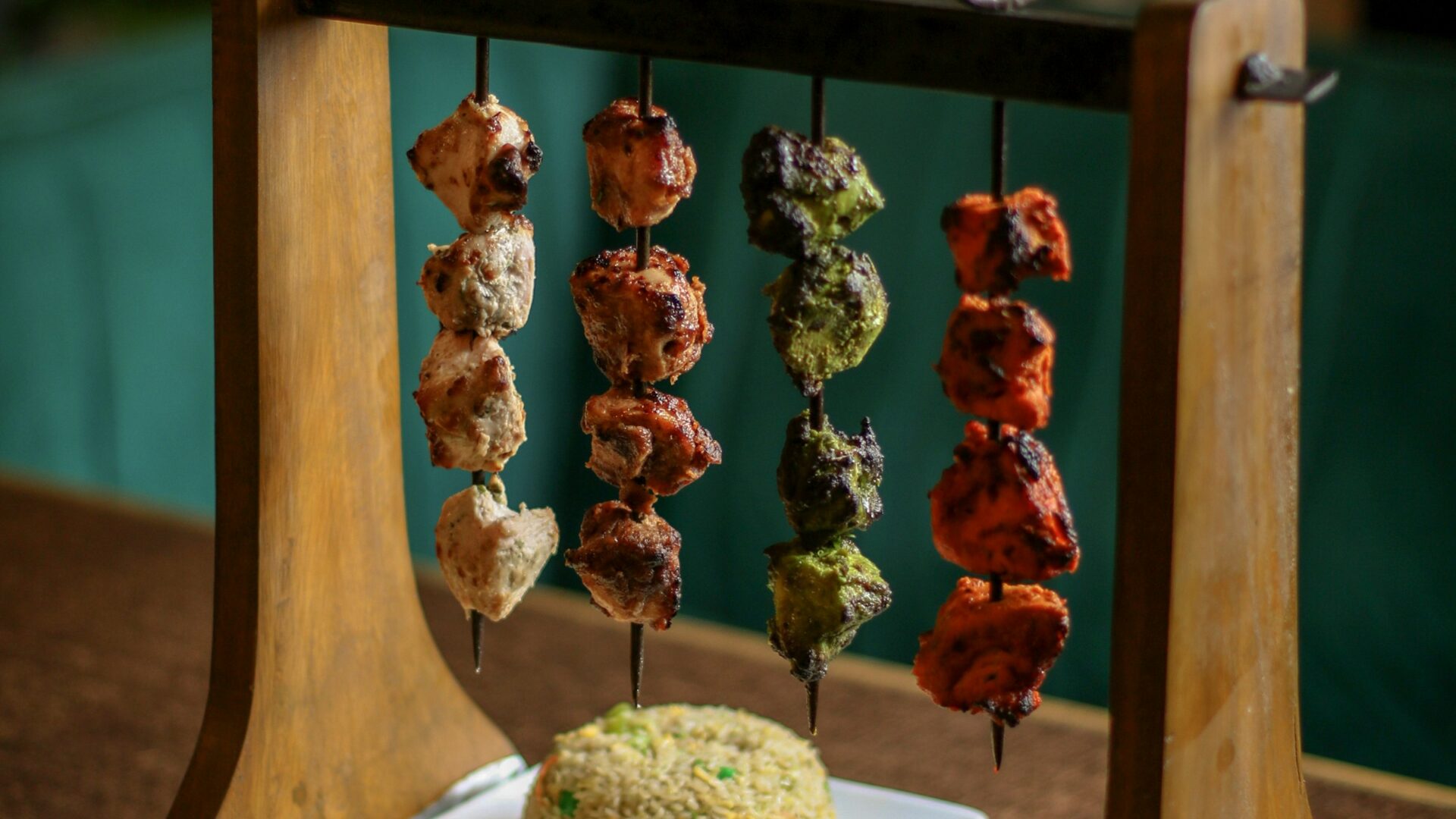
- Charsi Tikka: marinated with little more than salt and a touch of lemon, then slow-grilled over charcoal using lamb tail fat rather than a heavy marinade. Namak Mandi is where this dish is at its best.
- Kabuli Pulao: an Afghan-influenced rice dish, notably different from Pakistani biryani, mild and dairy-forward with no tomatoes or chili, finished with caramelized carrots, raisins, and toasted almonds.
- Siri Paye: a pre-dawn breakfast dish, beef or goat head and trotters slow-cooked for 6 to 8 hours into a rich, gelatinous broth, traditionally eaten before Fajr prayer.
- Dum Pukht: meat slow-cooked in a sealed pot over low heat, allowing the flavors to concentrate without added liquid.
Where to actually eat
- Namak Mandi, Grand Trunk Road: the city’s defining food street, not a single restaurant but a strip of eateries where diners often choose their meat by weight before it’s grilled fresh.
- Qissa Khwani Bazaar: historically a hub for traders and storytellers, still carries tea houses and grills lining its lanes.
- Saddar Food Street: a reliable stretch of eateries covering the city’s core dishes.
- Chowk Yadgar markets: round out the city’s main food destinations, especially for street snacks.
What to drink alongside it
Overall, Qahwa, a fragrant green tea simmered with cardamom, is the city’s signature after-meal ritual. It’s traditionally served in small porcelain cups following a Chapli Kabab or Dum Pukht meal. It’s less a beverage than a pause for conversation, worth experiencing as part of the meal rather than skipping.
Breads, sides and sweets to order with your meal
Meat is the centre of a Peshawari meal, but bread and sides complete it. Chapli kabab is typically served with hot naan and a tangy chutney, and grilled dishes usually come with naan, yogurt and salad. Peshawari naan is often topped with sesame seeds. For something sweet, look for kulfi falooda (ice cream with vermicelli and rose syrup), firni (rice pudding) and, in winter, gajar ka halwa. Qissa Khwani Bazaar is also a good place to buy dry fruits and sweets to take home.
Winter and late-night favourites
Press coverage of the city’s food streets describes beef nehari as a winter staple in Namak Mandi and Qissa Khwani, along with chapli kabab, seekh kabab and grilled fish. Qissa Khwani is known for serving nehari, rice pulao and haleem late into the night, so it suits an evening meal after a day in the Old City. Weekends, especially cool Sundays, are the busiest.
The tea houses of Qissa Khwani
Kahwa, the green tea mentioned above and also spelled qahwa, is a daily ritual, not just a drink after meals. Old tea houses (chai khaane) in Qissa Khwani keep water hot all day in central-Asian-style samovars. A glass of kahwa makes a good break between sights, and sitting in a tea house is one of the easiest ways to feel the character of the old city.
A one-day food plan for Peshawar
| Time | What to eat | Where to look |
|---|---|---|
| Early morning | Siri paye with naan | Shops that serve breakfast before and after dawn prayers |
| Late morning | Chapli kabab with naan and chutney | Namak Mandi, when the griddles are running |
| Lunch | Peshawari karahi or charsi tikka | Namak Mandi, Grand Trunk Road |
| Afternoon | Kahwa and dry fruits | A chai khaana in Qissa Khwani Bazaar |
| Evening | Nehari, haleem or rice pulao, then kulfi falooda | Qissa Khwani and nearby food streets |
Halal, vegetarian and dietary notes
All meat sold in Pakistan is halal, and Peshawari cuisine is heavily meat-centred. Vegetarian choices such as daal, vegetable dishes, bread and salad exist but are limited in the traditional food streets, so vegetarians may want to ask for vegetable dishes and eat at larger restaurants as well. Fine dining and international food are limited outside hotels. If you avoid particular foods, say so clearly and ask what goes into a dish before ordering.
Eating well and safely
- Choose busy stalls where food is cooked fresh and served hot.
- Ask for meat to be cooked through, and wash or sanitise your hands before eating.
- Drink bottled or boiled water, and be careful with ice and raw salads if your stomach is sensitive.
- Carry small cash notes, since many food streets do not take cards.
- See our street food safety tips for a fuller checklist.
Peshawari food guide: practical tips
- Head to Namak Mandi for the most authentic experience. This is where locals go, not a tourist-oriented version of the cuisine.
- Try Peshawari Karahi and Charsi Tikka side by side. Both showcase the region’s meat-forward, minimally spiced style, but with different cooking methods.
- Don’t skip Qahwa after your meal. It’s a genuine part of the dining ritual here, not an optional extra.
- Go hungry and go late morning through evening. Street food vendors are most active during lunch and dinner hours, when the grills are running hottest.
Pair this with our Peshawar travel guide for the wider city.
Frequently asked questions
What is Peshawar’s most famous dish?
Chapli Kabab. It’s a flat, spiced meat patty that originated here during the Mughal era, before spreading to cities across Pakistan, Afghanistan, and India.
What’s the difference between Peshawari Karahi and regular karahi?
The purist Peshawari version uses bone-in meat with only tomatoes, ginger, and green chilies. It skips the onions and yoghurt found in many other regional versions.
Where should I eat in Peshawar?
Namak Mandi on Grand Trunk Road is the defining food street, alongside Qissa Khwani Bazaar and Saddar Food Street.
What is Kabuli Pulao?
An Afghan-influenced rice dish, mild and dairy-forward, distinct from Pakistani biryani, finished with caramelized carrots, raisins, and almonds.
What should I drink with Peshawari food?
Qahwa, a fragrant cardamom-infused green tea, traditionally served after meals as a genuine part of the dining ritual.
Is Peshawari food spicy?
Not usually. The traditional style relies on salt, simple spices and good meat rather than heavy chilli, though chutneys and some dishes add heat. Ask for less spice if you prefer.
Can vegetarians eat in Peshawar?
Yes, but options are limited in the traditional food streets. Daal, vegetable dishes, bread and salad are the usual choices.
What is kahwa?
Kahwa, also spelled qahwa, is a fragrant green tea often served after meals and in Qissa Khwani’s old tea houses.
What should I order in Peshawar if I only have one meal?
Chapli kabab or charsi tikka at Namak Mandi, followed by kahwa, is the classic first-time order.
Sources and official information
See the Associated Press of Pakistan’s coverage of Peshawar’s food streets in winter and the Google Arts & Culture feature on Peshawar’s culinary traditions.