






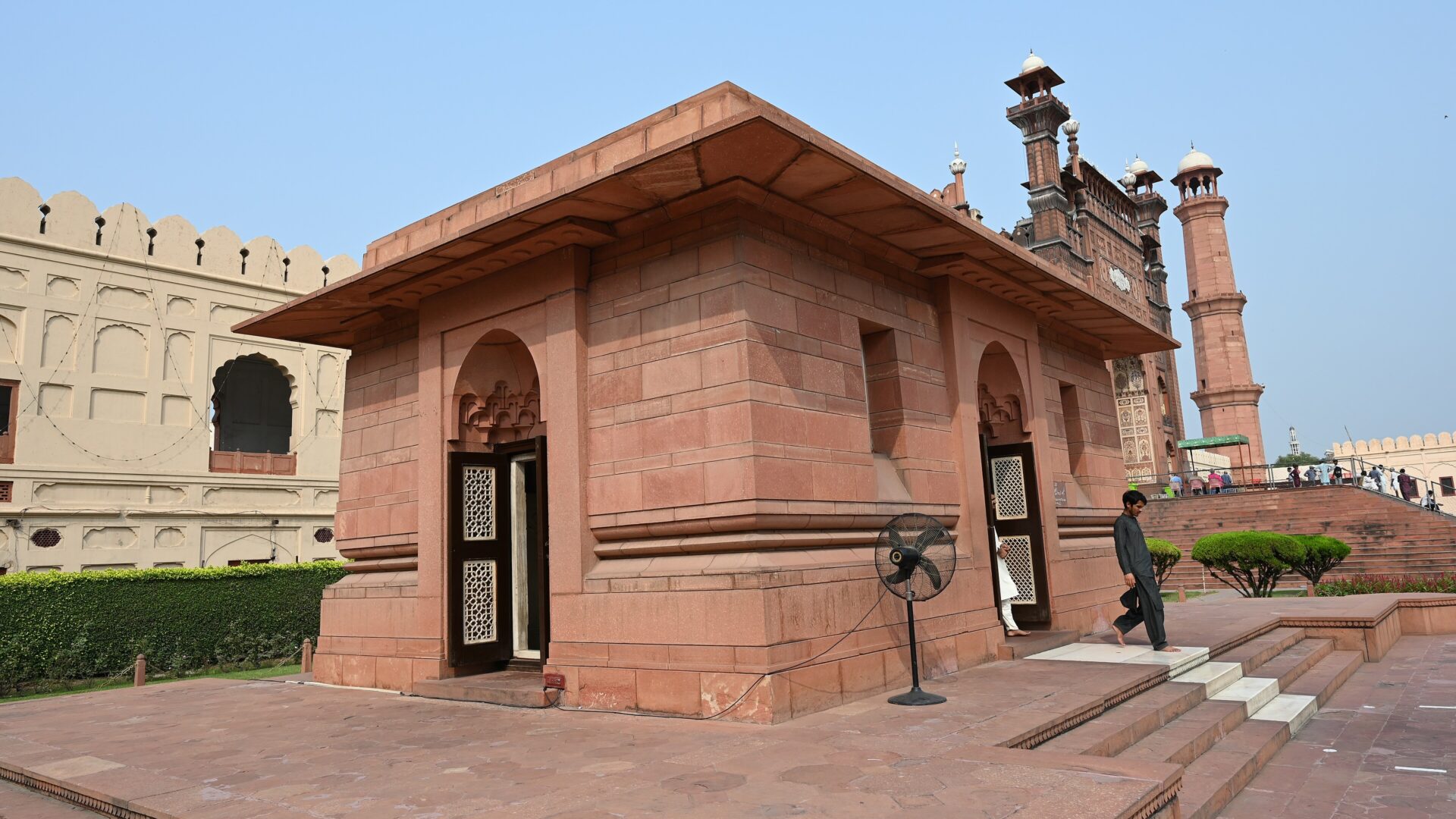
Allama Muhammad Iqbal, the poet and philosopher widely honoured as Pakistan’s national poet, was born in Sialkot and died in Lahore. Two cities hold the main places connected with his life: his birthplace in Sialkot and his tomb and last home in Lahore. Visiting them in order makes a quiet, meaningful heritage route.
This guide lists the places, explains what each one is, and flags what we could not confirm so you can check before you go.
Quick answer
See Iqbal Manzil in Sialkot, his birthplace and now a museum, and Mazar-e-Iqbal in Lahore, his tomb beside the Badshahi Mosque. In Lahore you can also look for Javed Manzil, his last residence, and the Iqbal Academy at Aiwan-i-Iqbal. We could not confirm opening hours or fees for any of them.
Iqbal’s life in brief
- Born 9 November 1877 in Sialkot; died 21 April 1938 in Lahore, aged 60.
- BA in 1897 and MA in 1899 at Government College, Lahore.
- Left for Europe in 1905, studied at Cambridge, was called to the bar at Lincoln’s Inn in 1906, and earned a PhD at Munich in 1907.
- Delivered the Allahabad Address on 29 December 1930.
Iqbal places at a glance
| Place | City | What it is |
|---|---|---|
| Iqbal Manzil | Sialkot | His birthplace, now a museum and library |
| Mazar-e-Iqbal | Lahore | His tomb in Hazuri Bagh |
| Javed Manzil | Lahore | His last residence on Allama Iqbal Road |
| Iqbal Academy Pakistan | Lahore | Research institute and library on Iqbal studies |
Iqbal Manzil, Sialkot
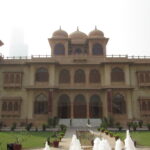
Iqbal Manzil stands in the heart of Sialkot and is the house where Iqbal was born. His great-grandfather bought it in 1861, and later owners enlarged what began as a small house. The Government of Pakistan acquired it in 1971 for restoration and opened it as a museum in 1977.
Entry is by guided tour across three storeys. Displays include furniture, photographs, handwritten poetry, and his pen and ink pot. The library holds more than 4,000 books, about 2,000 of them on Iqbal, and reading there is free. For visiting hours and any ticket, ask locally or contact the Punjab Archaeology Department, as we could not find a reliable published schedule.
Mazar-e-Iqbal, Lahore
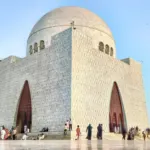
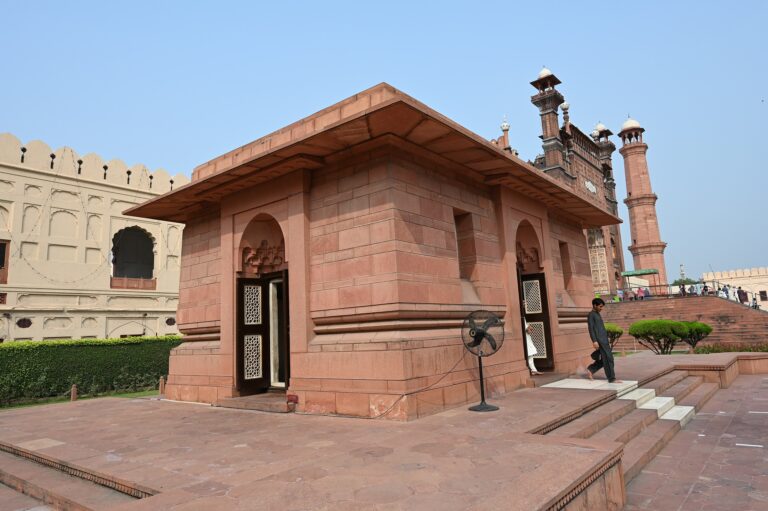
Iqbal’s tomb is in Hazuri Bagh, beside the walls of the Badshahi Mosque, between the mosque’s entrance and the Lahore Fort. The architect was Nawab Zain Yar Jang Bahadur, Chief Architect of Hyderabad Deccan. The tomb took thirteen years to build, partly because export restrictions on red stone slowed work after 1947. It uses red sandstone from Jaipur and white marble from Makrana, with a lapis lazuli tombstone. It is a protected heritage monument listed by the Punjab Archaeology Department.
Funds came from friends and admirers, and the committee reportedly refused donations from governments and rulers. Combine this stop with the Badshahi Mosque and Lahore Fort and our Lahore Fort visit guide.
Javed Manzil, Lahore
Javed Manzil was Iqbal’s last home, on Allama Iqbal Road, formerly Mayo Road. Sources say it was completed in 1935 and that he lived there for about three years until his death. It has been run as a museum, but we found conflicting dates for its declaration and inauguration, and could not verify whether it is currently open. Confirm before making a special trip.
Iqbal Academy Pakistan
The academy was founded in 1951 in Karachi and later moved to Lahore. It now occupies the sixth floor of Aiwan-i-Iqbal, which opened in 1996, and keeps a library on Iqbal studies. It is a research institution, not a sightseeing stop, so contact it first if you want to visit.
Iqbal Day: 9 November
Iqbal’s birthday is observed in Pakistan, and one report says the federal government restored it as a public holiday in 2023 after several years without one. Whether it is a holiday in a given year depends on the official notification, and 9 November 2026 falls on a Monday. Expect ceremonies and events at the tomb on or around the day, and check the notification for the current year.
Sample plan: Lahore half day
- Morning: Mazar-e-Iqbal, then the Badshahi Mosque and Lahore Fort.
- Afternoon: Javed Manzil if open, then lunch in the old city. See our Lahore food streets guide.
Sialkot is a separate trip, usually as a day out from Lahore.
Etiquette at the tomb
- Dress modestly and keep your voice low.
- Follow any signs on photography and footwear.
- Do not climb on or touch the tombstone area.
Frequently asked questions
Where was Allama Iqbal born?
In Sialkot, on 9 November 1877, at the house now called Iqbal Manzil.
Where is Allama Iqbal buried?
In Hazuri Bagh, Lahore, beside the Badshahi Mosque.
Can I visit Iqbal Manzil?
Yes, by guided tour. Check the current hours before you go.
Is Javed Manzil open to visitors?
It has operated as a museum, but we could not confirm its current status.
Opening hours, fees and holidays change. Confirm them before you travel.