























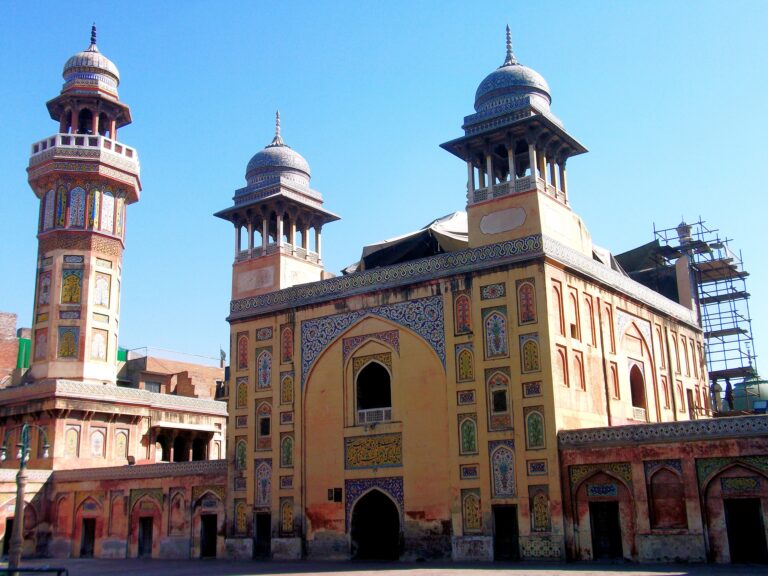


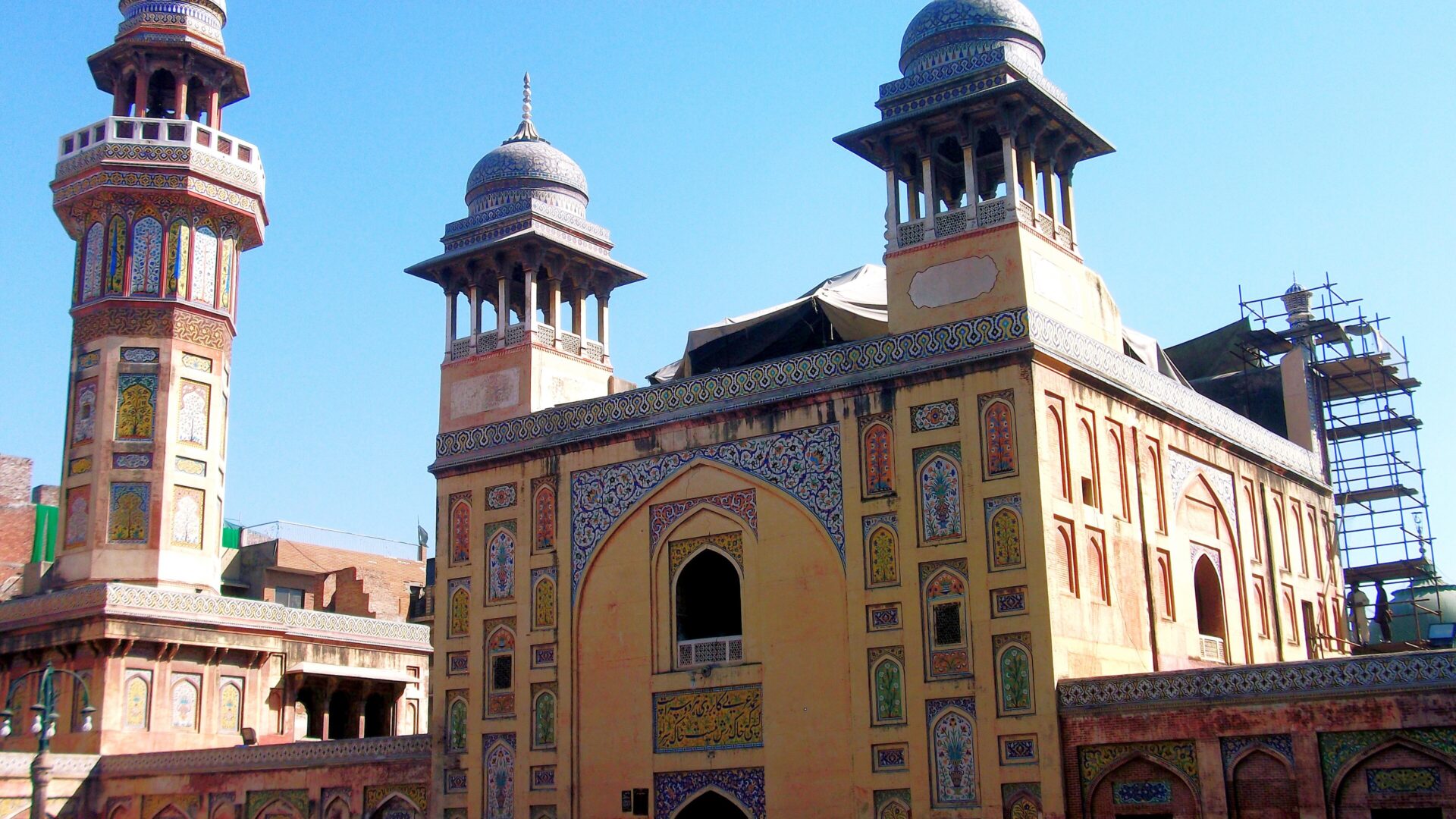
Wazir Khan Mosque is the most richly decorated mosque in Lahore’s Walled City. Every surface, from the tiled facade to the painted interior, is covered in pattern, and it rewards a slow visit far more than a quick photograph at the gate.
This guide covers its history, what to look for, how to find it in the old city, and what to confirm before you go.
Quick Answer
Wazir Khan Mosque stands in the Walled City of Lahore, about 260 metres west of Delhi Gate on the Shahi Guzargah. Construction began in 1634, though some sources give 1635, and it was completed on 3 December 1641. It was commissioned under the Mughal emperor Shah Jahan by Wazir Khan, a royal physician and viceroy of Punjab. It is known for its kashi-kari tilework outside and its frescoes inside.
Quick Facts
| Location | Walled City of Lahore, about 260 m west of Delhi Gate |
| Built | 1634 or 1635 to 1641 |
| Commissioned by | Wazir Khan, under Shah Jahan |
| Features | Five domes, four minarets, 32 study cells |
| Decoration | Kashi-kari tilework outside, frescoes inside |
| Heritage status | On UNESCO’s Tentative List since 1993 |
| Opening hours and tickets | Not confirmed; check locally |
History
Wazir Khan, a physician at the Mughal court who rose to be viceroy of Punjab, commissioned the mosque. Work began in the mid-1630s and finished in December 1641. The chief architect is not known.
The mosque was planned as part of a larger ensemble. The square in front of the main entrance, Wazir Khan Chowk, belongs to the original complex, and the nearby Shahi Hammam, a bathhouse, was built as part of the same group and helped fund the mosque’s upkeep.
Restoration has been under way for years. The Aga Khan Trust for Culture and the Government of Punjab have led it since around 2009, with funding from Germany, Norway and the United States. The site was also mapped in 3D in 2015.
What to Look For
- The tilework. The exterior is covered in kashi-kari, the glazed tile technique associated with Lahore, in floral and geometric patterns.
- The frescoes. Interior walls are painted, and the mosque is often called the most ornately decorated of the Mughal era.
- The minarets and domes. There are four minarets, about 107 feet tall, and five domes.
- The courtyard. The courtyard measures roughly 160 by 130 feet, with study cells around it.
How to Find It
The mosque is in the Walled City, a short walk west of Delhi Gate. Streets around it are narrow and crowded with shops, so it is easiest to walk the last stretch. Our Lahore guide introduces the city, and the top historical places in Lahore can help you plan a day.
Etiquette
- Dress modestly, with shoulders and knees covered. Women should carry a scarf.
- Remove your shoes before entering the prayer areas.
- Avoid prayer times for sightseeing, and keep your voice low.
- Ask before photographing worshippers.
Tickets and Hours
Current opening hours and ticket prices could not be confirmed from a reliable source. Ask your hotel or check with the Walled City of Lahore Authority before you visit.
Possible Itinerary
A morning in the Walled City
- Start at Delhi Gate and walk west along the Shahi Guzargah.
- Visit Wazir Khan Mosque and the square in front of it.
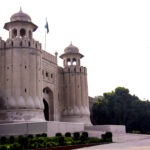
- Continue to Lahore Fort and the Badshahi Mosque.
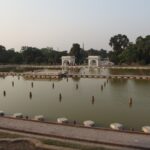
Add Shalamar Gardens on another day.
FAQs
Where is Wazir Khan Mosque?
In the Walled City of Lahore, about 260 m west of Delhi Gate.
When was it built?
Work began in 1634 or 1635, and it was completed on 3 December 1641.
Who built it?
Wazir Khan, a royal physician and viceroy of Punjab, under Shah Jahan.
Is it a UNESCO site?
It has been on UNESCO’s Tentative List since 1993, but it is not yet inscribed.
Conclusion
Wazir Khan Mosque is best seen up close and unhurried. Give yourself time for the tilework and the interior, walk in from Delhi Gate, and confirm hours before you go.