




















Katas Raj is a complex of ancient temples built around a sacred pond in the Salt Range of Punjab. For Hindus it is one of the holiest sites in Pakistan, and for any visitor interested in history it is one of the most layered places in the province, with shrines that span more than a thousand years.
This guide explains what the site is, what you can see, how to reach it and what to check before you go.
Quick Answer
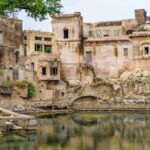
Katas Raj is near Choa Saidanshah in Chakwal District, Punjab, close to Kallar Kahar, on the Potohar Plateau at about 610 m. The complex is linked to the M2 Motorway. Its focal point is the Katas pond, sacred to Hindus, and the temple group includes Satghara, a cluster of seven temples of which five survive. Entry fees and visiting hours could not be confirmed, so ask locally before you travel.
Quick Facts
| Location | Near Choa Saidanshah, Chakwal District, Punjab |
| Altitude | About 610 m |
| Key features | Sacred pond, Satghara temples, Rama and Hanuman temples |
| Oldest temple | Temple B, late 6th century CE; main Temple A is 10th century |
| Fees and hours | Not confirmed; check locally |
The Legend of Katas
Hindu tradition holds that the pond formed from the tears of Shiva after the death of Sati, as described in the Puranas. The Mahabharata also links the place to the Pandavas’ exile and the episode known as the Yaksha Prashna. That sacred story is why pilgrims have come here for centuries.
History
The temples were built over several centuries by the Shahi dynasties, between roughly the mid-7th and 10th centuries, though the archaeologist Alexander Cunningham dated the shrines to about 66 BCE. The seventh-century traveller Xuanzang reported a stupa here linked to the emperor Ashoka, which he described as 200 feet tall and surrounded by ten springs.
Sikh tradition holds that Guru Nanak visited. Maharaja Ranjit Singh made pilgrimages in 1806, 1818 and 1824, and a small fort was built in the time of Hari Singh Nalwa. Indian pilgrims were barred after 1965 and were allowed again from 1984. In 2025 Pakistan issued 154 visas to Indian pilgrims for a visit.
What You Can See
- The Katas pond. A sacred pond with a maximum depth of about 20 feet.
- The Satghara group. Seven temples, five still standing, southwest of the pond. The oldest dates to the late 6th century and the main temple to the 10th.
- The Rama and Hanuman temples. Other shrines in the complex, which lists around a dozen temples.
The Water Crisis
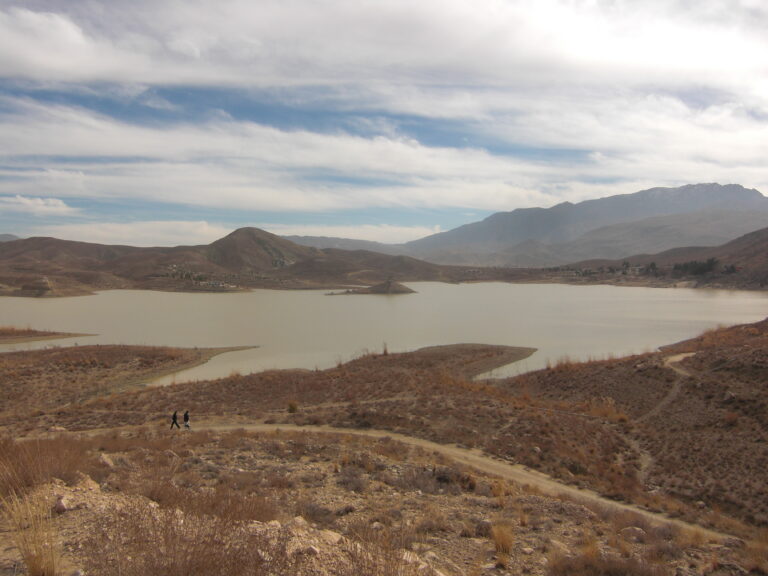
The pond has struggled. Its water level fell in 2012 and again in 2016 to 2017, which reports linked to groundwater use by nearby cement factories and water-hungry eucalyptus trees. In May 2018, the Supreme Court ruled that the factories must find water elsewhere. If you visit, check what the pond looks like at the time, as levels vary.
How to Reach Katas Raj
The site is connected to the M2 Motorway. Ask your driver or hotel for the best exit and travel time, as no reliable distance from Islamabad or Lahore was available for this guide. Our Islamabad travel guide and Punjab travel guide cover the wider routes. Many visitors pair it with the Khewra Salt Mine in the same region.
Visitor Tips
- Dress modestly and treat it as an active place of worship.
- Remove shoes where signs or people ask.
- Go in the cooler months, roughly October to March.
- Carry water and snacks, as facilities may be limited.
FAQs
Where is Katas Raj?
Near Choa Saidanshah in Chakwal District, Punjab.
Why is it sacred?
Hindus believe the pond formed from Shiva’s tears after Sati’s death.
How old are the temples?
The oldest, Temple B, dates to the late 6th century CE, and the main Temple A to the 10th century.
Is there an entry fee?
Not confirmed. Ask locally.
Conclusion
Katas Raj is a quiet but significant site, with a long religious history. Visit with respect, check the condition of the pond, and confirm access details before you set out.