







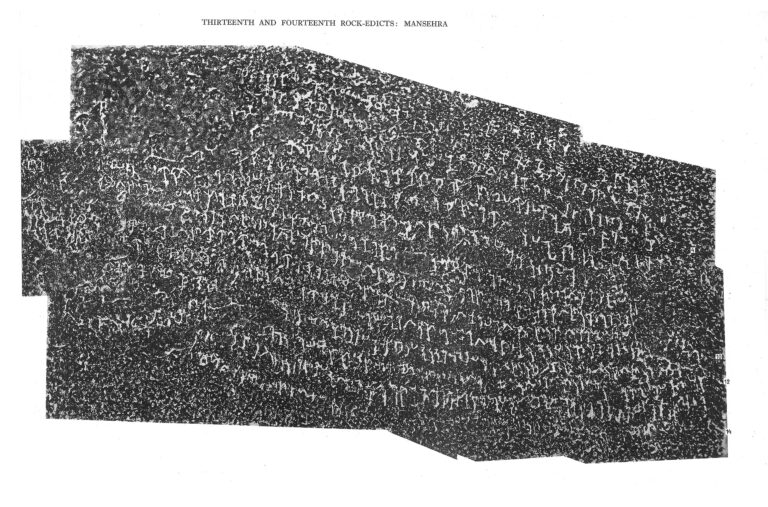

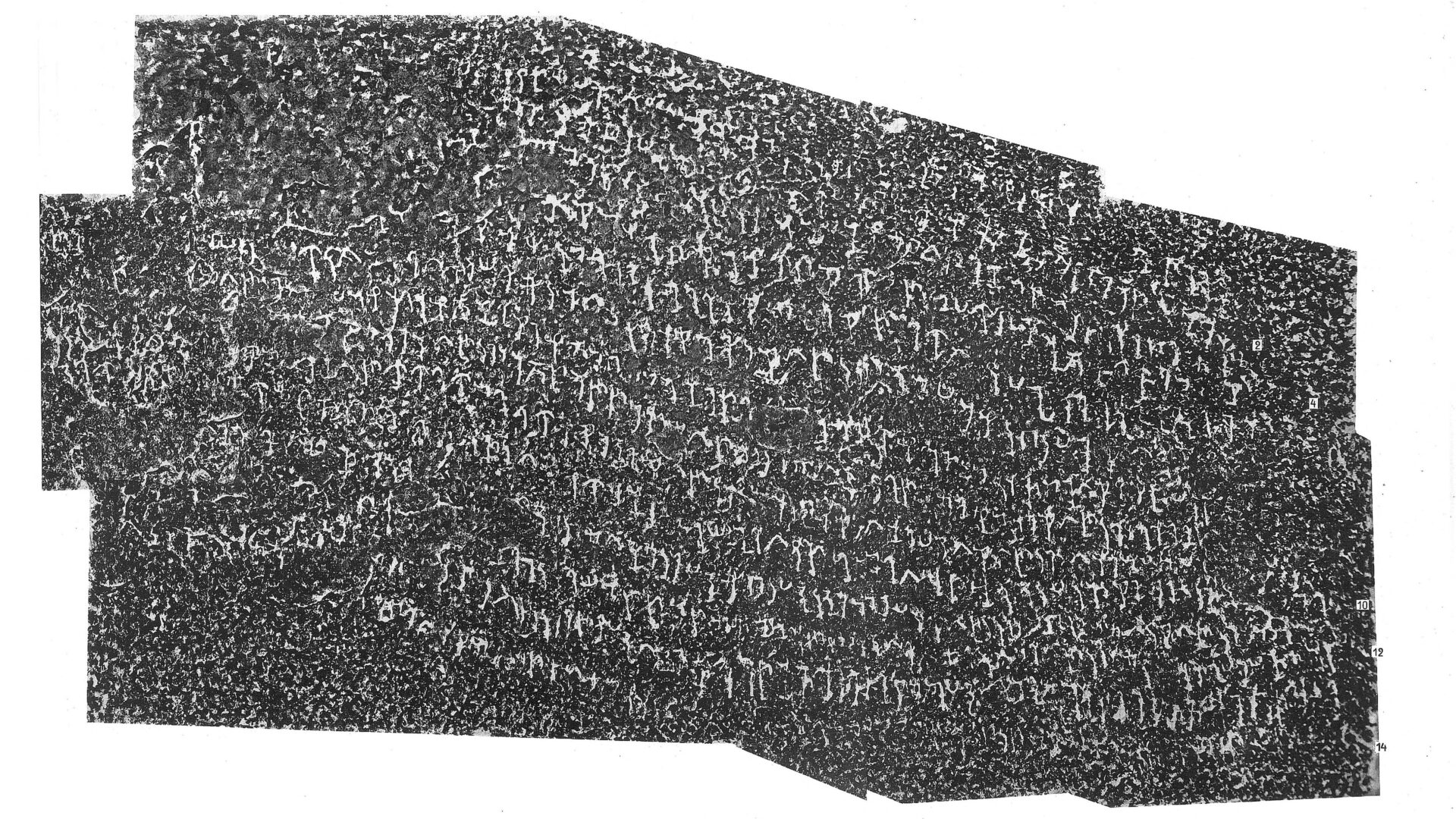
Two sets of rock inscriptions in Khyber Pakhtunkhwa carry the words of the emperor Ashoka, who ruled much of South Asia in the 3rd century BCE. They are at Mansehra and Shahbazgarhi, both carved into rock in the Kharosthi script, and UNESCO describes the Mansehra edicts as the earliest irrefutable evidence of writing in South Asia.
This guide explains what the edicts are, where to find them, and what to expect when you visit.
Quick answer
The Mansehra edicts are cut into three boulders on the north side of Mansehra town, about 104 km from Islamabad, and the Shahbazgarhi edicts are on two boulders in a village about 12 km from Mardan. Both are on Pakistan’s UNESCO Tentative List but are not inscribed World Heritage Sites. We could not confirm fees, opening hours or custodians for either site.
The two sites at a glance
| Mansehra | Shahbazgarhi | |
|---|---|---|
| District | Mansehra | Mardan |
| The inscriptions | Fourteen Major Rock Edicts on three boulders | Edicts on two large boulders |
| Script | Kharosthi, written right to left | Kharosthi |
| Date | Mid-3rd century BCE | 3rd century BCE |
| Location | North side of Mansehra town | Shahbaz Garhi village, about 12 km from Mardan on the Mardan–Swabi Road |
| UNESCO Tentative List | Yes (ref. 1881) | Yes (ref. 1880) |
Who was Ashoka, and why do the edicts matter?
Ashoka was a Mauryan emperor who had his edicts carved on rocks and pillars across his empire, setting out principles of conduct and rule. Dates for his reign differ (about 272 to 235 BCE or about 268 to 232 BCE), so we say simply the 3rd century BCE. Most of his inscriptions are in Brahmi script. The edicts in the north-west of the subcontinent are in Kharosthi, which was deciphered by James Prinsep in the 1830s using Indo-Greek coins.
The Mansehra site lies beside an ancient route linking the Vale of Peshawar with Kashmir, Gilgit and Central Asia, with Taxila to the south, which helps explain why an emperor chose it.
Mansehra rock edicts
The fourteen Major Rock Edicts are carved on three large boulders on a rocky outcrop. Edict XII is carved separately, in larger letters than the others. The site is on the north side of town, about 104 km from Islamabad via the Hazara Motorway, roughly 1.5 hours by car. Erosion is fading the script in places and that the provincial archaeology department installed canopies, though this is a single source. For the wider town, see our guide to Mansehra.
Shahbazgarhi rock edicts
The Shahbazgarhi edicts are on two large boulders in the village of Shahbaz Garhi, about 12 km from Mardan city at 293 m on the Mardan–Swabi Road. A translation board stands near the rocks. A community reviewer reports simple shelters and no entry fee, but that is anecdotal and should be checked.
The site’s history is part of the story. Charles Masson copied the inscription in October 1838, and in 1888 the archaeologist Harold Deane found the missing Twelfth Edict on a separate rock about 50 yards away.
UNESCO status
Both sites appear as separate entries on Pakistan’s UNESCO Tentative List: the Shahbazgarhi Rock Edicts (ref. 1880) and the Mansehra Rock Edicts (ref. 1881). The Mansehra entry is dated 30 January 2004 and cites criteria (ii), (iii) and (vi). A tentative listing is a first step and does not mean World Heritage status.
Combine with Takht-i-Bahi
Shahbazgarhi is in Mardan District, as is Takht-i-Bahi, a Buddhist monastery inscribed as a UNESCO World Heritage Site in 1980 and located about 15 km from Mardan city on Malakand Road. We did not find a source for the driving distance between the two. For a longer heritage route, add Taxila.
Sample plan: a heritage day from Islamabad
- Morning: Drive to Mansehra via the Hazara Motorway and see the edicts.
- Afternoon: Return toward Mardan for Shahbazgarhi and Takht-i-Bahi, if time and daylight allow. This is a long day, and the two directions are different, so many visitors split the sites into two trips.
What to bring and how to behave
- Carry water and sun protection, because shade at the rock sites may be limited.
- Do not touch or rub the inscriptions, and do not climb on the boulders.
- Ask a local guide or a custodian for the translation boards and the stories behind the edicts.
Frequently asked questions
Where are Ashoka’s edicts in Pakistan?
At Mansehra and Shahbazgarhi, both in Khyber Pakhtunkhwa.
What script are they in?
Kharosthi, written right to left.
Are they UNESCO World Heritage Sites?
Not yet. Both are on the Tentative List.
Is there an entry fee?
We could not find a published fee. A community reviewer reported none at Shahbazgarhi.
Access, conditions and fees change. Confirm them with local contacts or the provincial archaeology department before you travel.