























Taxila is one of the easiest and most rewarding day trips from Islamabad. This ancient city of Gandhara, about an hour from the capital, preserves the ruins of three successive cities and several Buddhist monasteries, and it has been a UNESCO World Heritage Site since 1980. This Taxila visit guide covers what to see, how the sites are spread out, how to get there from Islamabad, the best time to go and a simple day plan. Last checked: October 2026. Opening hours, ticket prices and transport change, so confirm locally before you go.
Quick answer: how long do you need in Taxila?
Allow half a day for the museum and the closest sites, or a full day if you want every monument. A good order is Taxila Museum, then Bhir Mound, Sirkap, Dharmarajika Stupa, and finally Jaulian and Mohra Moradu. The sites are spread over several kilometres, so you need a car, a rickshaw or a long walk between them.
| Detail | Taxila |
|---|---|
| Location | Rawalpindi District, Punjab |
| Distance from Islamabad | Roughly 30 to 45 km depending on the site, about an hour by road |
| UNESCO status | World Heritage Site since 1980 |
| Main sights | Taxila Museum, Bhir Mound, Sirkap, Dharmarajika Stupa, Jaulian, Mohra Moradu |
| Time needed | 4 to 6 hours for the main sites |
| Best months | October to March |
A short history of Taxila
Taxila grew from early settlements into a major city of the Gandhara region. The oldest city site is Bhir Mound, followed by Sirkap, a later fortified city, and then Sirsukh. UNESCO records that Alexander the Great camped at Taxila and that the Mauryan prince Ashoka governed it. Over the following centuries Buddhist stupas and monasteries spread across the valley, and a number of them survive as the monuments you can visit today.

1. Taxila Museum
Start at the museum in the centre of the modern town. Its core collection comes from the excavated sites of the valley, including Bhir Mound, Sirkap, Sirsukh, Dharmarajika, Mohra Moradu and Jaulian, so visiting it first helps you understand what you see later. Look for Buddha statues, stucco sculptures and everyday objects.
2. Bhir Mound
Bhir Mound is directly in front of the museum and is the earliest city site in Taxila. The remains show how the city was laid out in its early centuries. It is a quick stop of 30 to 45 minutes.
3. Sirkap
Sirkap lies about 2 km from the museum. It is the second fortified city of Taxila, with a main street, shops and house foundations laid out on a grid, and small stupas and shrines. Walk along the main street for a clear sense of how a city looked.
4. Dharmarajika Stupa
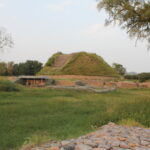
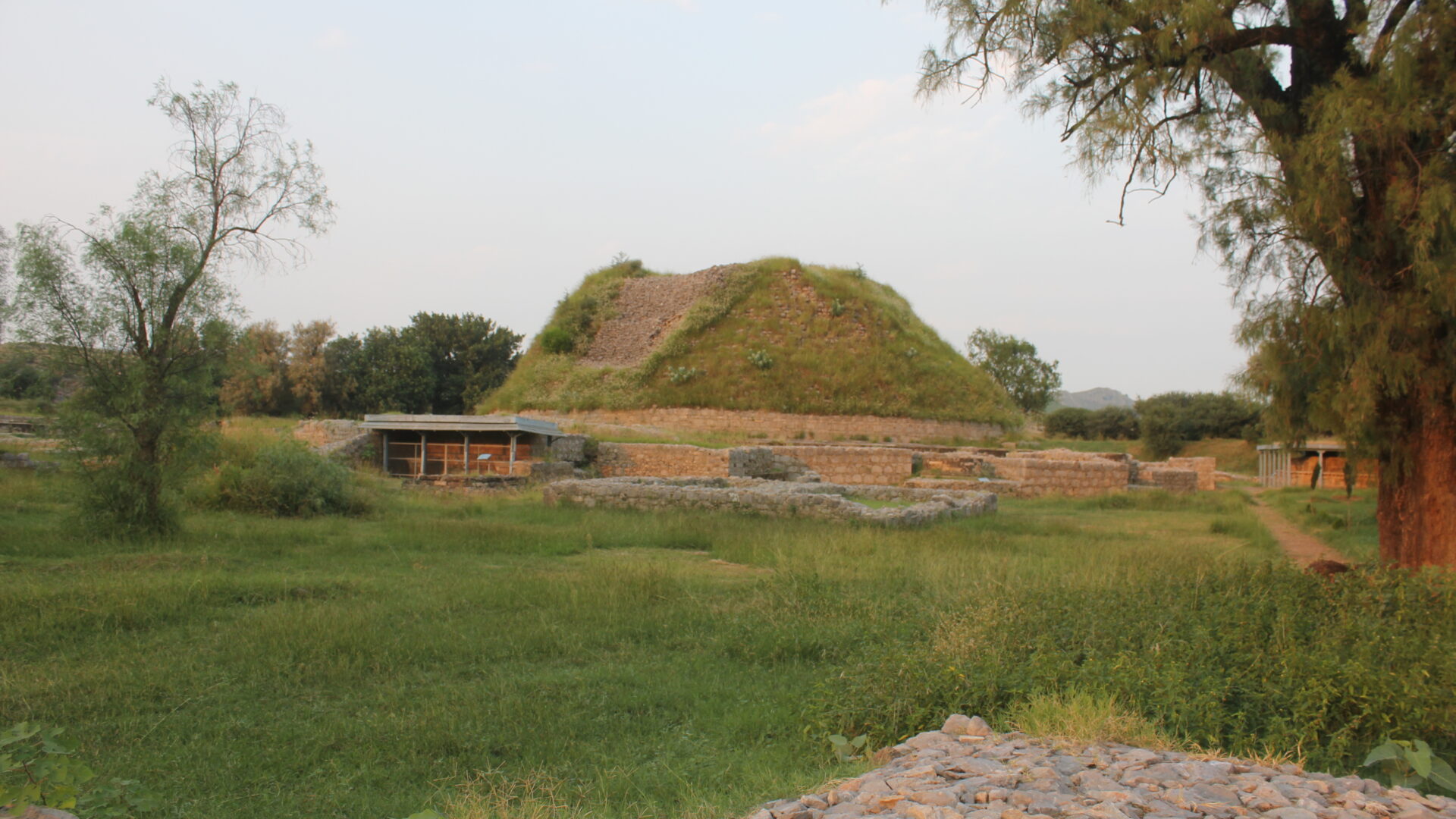
Dharmarajika is the largest stupa in the Taxila region, about 3 km from the museum according to official information, though some visitors report slightly more. It is attributed to Ashoka in the third century BCE, and the surrounding complex of small stupas and monastic cells was used for centuries. The main mound is damaged, but the circular platform, steps and chapels are easy to read.
5. Jaulian Monastery
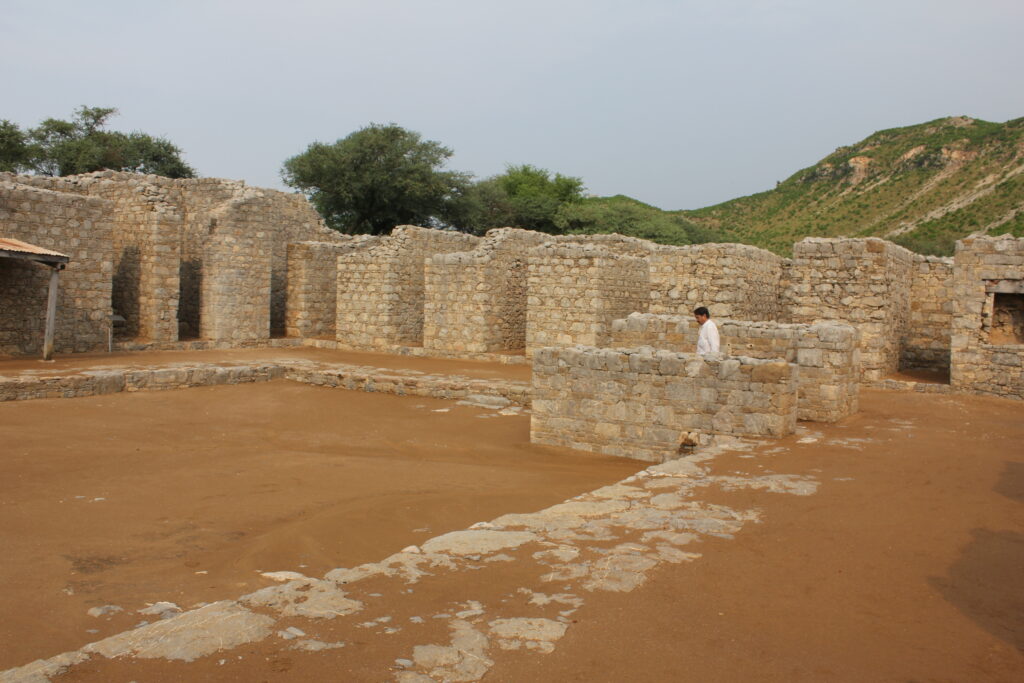
Jaulian is a ruined Buddhist monastery from the second century CE, set on a hill above a village. It has a courtyard of votive stupas and rows of monastic cells around a water tank, and its decorated stupas are among the best preserved in Taxila. It is often described as an early centre of Buddhist learning.
6. Mohra Moradu
Mohra Moradu is a smaller monastery near Jaulian, with a main stupa, a votive stupa and monastic cells, built in the second century CE and renovated in the fourth and fifth centuries. Visit it together with Jaulian if you have time. Many of its sculptures are displayed in the museum.
A simple day plan
| Time | Plan |
|---|---|
| Morning | Taxila Museum and Bhir Mound (about 2 hours) |
| Late morning | Sirkap (about 1 hour) |
| Midday | Dharmarajika Stupa (45 to 60 minutes), then lunch in town |
| Afternoon | Jaulian and Mohra Moradu (about 1.5 hours), then return to Islamabad |
These are estimates. Start early so you reach the outer sites with enough daylight.
How to get to Taxila from Islamabad
- Car or taxi with a driver: the easiest option. Agree the route, the stops and the waiting time before you set off. The drive is about an hour each way.
- Ride-hailing: inDrive and Yango work in Islamabad and Rawalpindi, but arrange your return in advance, because rides back from the sites can be harder to find. See our public transport guide.
- Bus or train: buses and vans run from Rawalpindi, and a railway station is near the museum. Services and times change, so confirm locally.
- Between sites: use a taxi, rickshaw or your driver. Sirkap and Bhir Mound can be done on foot from the museum area.
Tickets and opening hours
Entry fees and opening hours vary by site and change, so ask at the museum or check the Punjab Department of Archaeology and Museums website. Carry cash in small notes. Most sites are open-air, so plan to be back before dusk.
Best time to visit Taxila
October to March is the most comfortable period for walking between sites. Islamabad sightseeing is at its best in spring and autumn, while summer afternoons are hot and the monsoon can interrupt plans. See our guide to Pakistan in October and the full best time to visit Pakistan.
What to wear and bring
- Comfortable walking shoes for uneven ground, a hat, sunscreen and water
- Modest clothing, loose and light (see what to wear in Pakistan)
- Cash for tickets, snacks and transport
- A camera, and ask before photographing people
Treat the monuments with respect. Do not climb on stupas or walls, and do not remove any stones or fragments.
Combine Taxila with Islamabad
Many visitors pair Taxila with a morning in the capital. See our Islamabad travel guide, top places to visit in Islamabad and Pakistan Monument. For more heritage sites, read our guides to UNESCO sites in Pakistan, Mohenjo-daro and forts in Pakistan.
For more Gandhara heritage, see our guide to Takht-i-Bahi near Mardan.
Frequently asked questions
Is Taxila worth visiting?
Yes, especially if you are interested in history, Buddhism or Gandhara art. It is one of Pakistan’s UNESCO sites and an easy day trip from Islamabad.
How far is Taxila from Islamabad?
Roughly 30 to 45 km depending on the site, about an hour by road.
How much time do I need in Taxila?
Half a day for the museum and nearby sites, or a full day for every monument.
Is Taxila a UNESCO World Heritage Site?
Yes. It was inscribed on the World Heritage List in 1980.
Can I visit Taxila by public transport?
Yes, but moving between the outer sites is easier with a car or driver. Confirm bus and train times locally.
What is the best time to visit Taxila?
October to March is the most comfortable period.
Sources and official information
For official details, see the Punjab Department of Archaeology and Museums (Taxila World Heritage site page) and the Taxila Museum website. Photos: Muhammad Zahir, CC BY-SA 3.0, via Wikimedia Commons.