























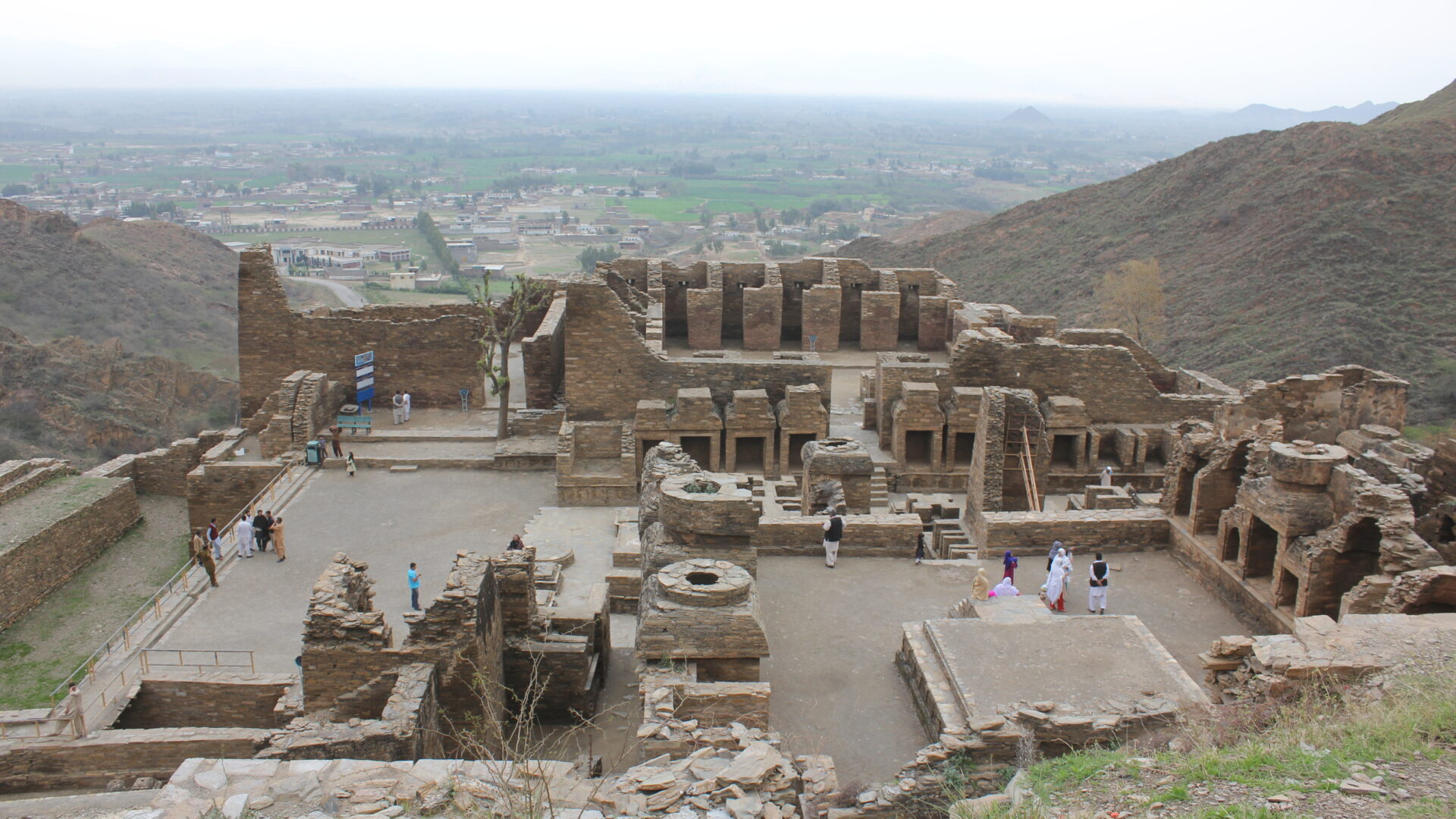
Takht-i-Bahi is the best-preserved Buddhist monastery in Pakistan and one of its UNESCO World Heritage Sites. Its stone stupas, courtyards and monastic cells climb a rocky hill near Mardan in Khyber Pakhtunkhwa, with the ruins of a small fortified town, Sahr-i-Bahlol, a short distance away. This Takht-i-Bahi visit guide covers the history, what to see, how to get there and the best time to go. Last checked: October 2026. Opening hours, ticket prices and road conditions change, so confirm locally before you travel.
Quick answer: is Takht-i-Bahi worth visiting?
Yes, if you are interested in Gandhara history or Buddhist heritage. Plan about one to two hours at the site, including the climb, and pair it with Peshawar, Mardan or the road to Swat. It sits on the main road towards Swat, so it also works as a stop on a longer trip. It is a different experience from Taxila, with a hilltop setting and a more complete monastic layout.
| Detail | Takht-i-Bahi |
|---|---|
| Location | Near Takht-i-Bahi village, Mardan District, Khyber Pakhtunkhwa |
| From Mardan | About 15 to 16 km north-west, on the main road towards Swat |
| From Peshawar | About 80 to 90 km, roughly an hour or two by road |
| Date | Founded in the early 1st century and used until about the 7th century |
| UNESCO status | World Heritage Site since 1980, together with Sahr-i-Bahlol |
| Setting | A rocky hill rising about 150 m above the surrounding plain |
| Time needed | 1 to 2 hours at the site |
| Best months | October to March |
A short history of Takht-i-Bahi
The monastery was founded in the early 1st century and grew over several centuries in the Gandhara region, which was home to a major school of Buddhist art. Archaeologists divide the history of the complex into several periods, from the 1st century BC to the 7th century AD. The monastery was abandoned in the 7th century, but its hilltop position helped the ruins survive in good condition. The name is usually translated as the throne of the water spring, and the site was excavated and studied in the early 20th century. UNESCO inscribed the Buddhist ruins of Takht-i-Bahi and the neighbouring city remains at Sahr-i-Bahlol in 1980 as typical examples of Gandharan monastic and urban communities.
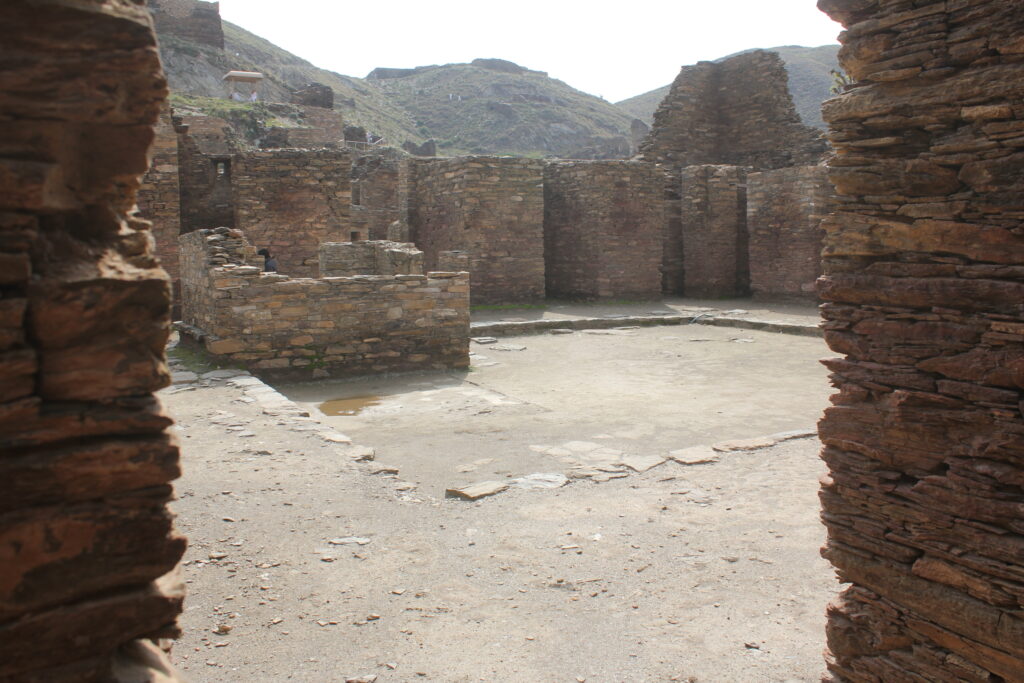

What to see at Takht-i-Bahi
- Main stupa court: the central courtyard, surrounded by small chapels, is the heart of the site.
- Votive stupas court: a courtyard of smaller stupas built by worshippers.
- The group of three stupas: a distinctive cluster that is easy to spot from the paths.
- Monastic quadrangle and cells: rows of small chambers, including meditation cells, where monks lived and studied.
- Assembly hall and covered stepped passageways: the remains show how the monastery was organised on the slope.
Many sculptures found here are displayed in museums, so the Peshawar Museum is a good companion visit. You can also compare the sites with our Taxila guide.
Sahr-i-Bahlol: the neighbouring fortified town
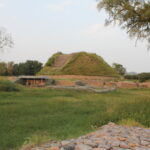
Sahr-i-Bahlol was a small fortified town from the same period and lies a few kilometres from Takht-i-Bahi (sources give distances between about 1 and 4 km). Its walls and mounds are less dramatic than the monastery, but they show how a Gandharan town was laid out. Ask locally whether access and signage are in good condition.
How to get to Takht-i-Bahi
- From Peshawar: drive north-east towards Mardan, then continue on the road towards Swat. A hired car with a driver is the easiest option.
- From Islamabad: allow roughly three to four hours by road, depending on the route and traffic. Many visitors combine it with Taxila or stay overnight in Peshawar.
- From Mardan or Swat: the site is on the main road, so you can stop on the way. See our guide to Swat Valley.
- Local transport: vans and buses serve Mardan and the nearby town, and rickshaws can take you to the base of the hill. Confirm routes locally.
Visiting tips
- Wear sturdy shoes. The climb on stone steps is steep and uneven in places.
- Bring water, a hat and sun protection, since there is little shade.
- Dress modestly (see what to wear in Pakistan) and be respectful at a place that is sacred to many Buddhists.
- Do not climb on walls or stupas, and do not remove stones or fragments.
- Ask before photographing people, and carry small notes for tickets and snacks.
Best time to visit Takht-i-Bahi
October to March is the most comfortable period. Summers in the Peshawar plain are very hot, and the climb is harder at midday. See the best time to visit Pakistan guide and our October guide.
Combine Takht-i-Bahi with other places
- Peshawar: the old city, bazaars and museum
- Swat Valley: further north on the same road
- Taxila: more Gandhara and Buddhist sites near Islamabad
- UNESCO sites in Pakistan
Frequently asked questions
Where is Takht-i-Bahi?
It is near Takht-i-Bahi village in Mardan District, Khyber Pakhtunkhwa, about 15 to 16 km north-west of Mardan.
How old is Takht-i-Bahi?
The monastery was founded in the early 1st century and was used until about the 7th century.
Is Takht-i-Bahi a UNESCO World Heritage Site?
Yes. It was inscribed in 1980 together with the neighbouring city remains at Sahr-i-Bahlol.
How long do you need at Takht-i-Bahi?
One to two hours is enough for the climb and the main areas, with extra time if you also visit Sahr-i-Bahlol.
What is the best time to visit?
October to March. Summer afternoons are very hot.
Sources and official information
See the UNESCO World Heritage listing for Takht-i-Bahi. Photos: Muhammad Zahir, CC BY-SA 3.0, via Wikimedia Commons.