








Spring vs autumn in Hunza is a close call. Most seasoned visitors who’ve seen both agree on one thing: summer gets the crowds, but spring and autumn get the better light. Here’s how the two actually compare.
Spring vs autumn in Hunza at a glance
Use this table to match each season to what you care about most. The timing section below explains the dates in detail.
| If you care about | Spring | Autumn |
|---|---|---|
| Colours | Soft pink and white blossom | Gold, orange and red foliage |
| Flexible dates | Narrow; about 2 to 3 weeks of bloom at any one altitude | Longer and more forgiving |
| Crowds | Busy around bloom weekends and Navroz week | Quieter than spring and summer |
| Festival | Navroz on 21 March | No single festival to plan around |
| Hiking | Possible, but plan around cold mornings | Milder weather suits trails such as Ultar Meadows |
| Booking ahead | Important for spring weekends and Navroz week | Sensible for the busiest autumn dates |
Karimabad, the usual base, sits at about 2,400 m, so mornings and evenings are cold in both seasons. If you are still deciding when to go overall, read our guide to the best times to visit Hunza, and plan the days with the 3 days Hunza itinerary.
Spring vs autumn in Hunza: exact timing
Spring blossom season runs roughly mid-March to mid-April, though it moves up the valley as elevation increases. Lower Hunza blooms first, often the last week of March. Karimabad and Duikar peak in early April, and upper Hunza can hold blossoms into late April. Peak bloom at any given altitude lasts only 2 to 3 weeks.
Autumn runs September through October, sometimes stretching into early November at lower elevations. Unlike spring’s narrow, altitude-dependent window, autumn color holds for longer. It’s also less sensitive to exact timing, making it the easier season to plan around.
| Spring | Autumn | |
|---|---|---|
| Window | Mid-March to mid-April | September to October |
| Peak duration | 2-3 weeks per altitude band | Longer, more forgiving |
| Temperature | 10-25°C | Mild, cooling toward November |
| Crowd level | Second busiest season | Quieter than spring and summer |

What each season actually looks like
Spring paints the valley in pink and white. Apricot, cherry, and apple trees bloom against the snow-capped Karakoram backdrop, and roughly 70% of Hunza’s fruit trees flower each spring. It’s a delicate, renewal-focused palette, soft rather than dramatic.
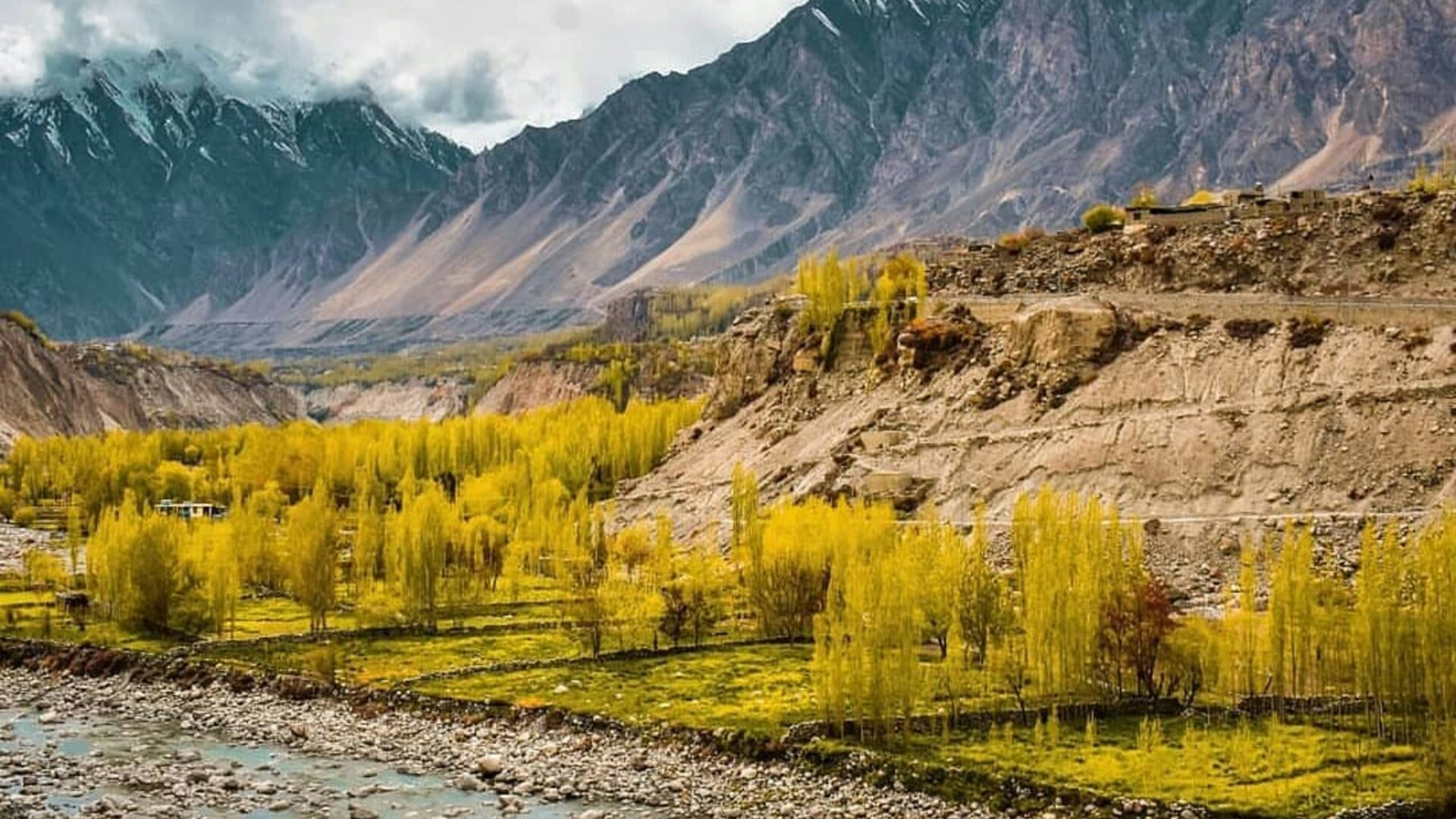
Autumn is the opposite mood entirely. Poplars and orchards turn gold, orange, and red, a richer, warmer palette set against the same peaks. Many photographers actually prefer autumn’s color intensity to spring’s softer tones. This comes down to personal taste, though, more than any objective ranking.
Best viewpoints for each season
For spring blossoms:
- Eagle’s Nest, for sweeping aerial views combining blossoms and mountains
- Duikar village, among the earliest and most reliable bloom spots
- Baltit Fort, offering a panoramic valley view framed by flowering trees
- Karimabad’s main streets, where blossoms mix with everyday village life
For autumn foliage:
- Karimabad, for classic views of Rakaposhi and Ultar Sar against golden trees
- Ultar Meadows, reached by a moderate hike, for a quieter, elevated perspective
- Misgar Valley, further from the main tourist circuit
Costs compared: spring vs autumn in Hunza
We could not verify a published seasonal price list for Hunza, so we do not quote different rates for spring and autumn. What we can give is the general range of room prices reported in 2026. Rates change with demand and season, so check current rates before you book.
| Room type | Reported range, per night |
|---|---|
| Guesthouse | PKR 1,500 to 3,500 |
| Standard tourist hotel | PKR 4,000 to 8,000 |
| Mid-range hotel | PKR 8,000 to 18,000 |
| Luxury resort | PKR 30,000 to 100,000+ |
What does differ between the seasons is availability. Spring weekends and Navroz week are the busiest stretches, so rooms in Karimabad fill first and prices are more likely to tighten. Autumn is quieter overall, but the best-known dates still book up. Ask hotels for season-specific rates, and see our hotels in Hunza guide and the Pakistan travel cost guide.
Spring vs autumn in Hunza: which should you choose?
Choose spring if:
- You want to time your trip around Navroz, the Persian New Year celebrated March 21 with polo matches and traditional dances
- Soft, delicate scenery appeals more than bold color
- You don’t mind the narrower, altitude-dependent bloom window
Choose autumn if:
- You want a longer, more forgiving window to plan around
- Bold, warm color and quieter crowds matter more to you than blossoms specifically
- You’re combining Hunza with hiking, since Ultar Meadows and similar trails suit the milder autumn weather well
Plenty of repeat visitors try to catch both seasons at least once. They offer different experiences of the same valley, not just the same scenery in different colors.
A few practical tips
- Track the bloom by altitude, not by a fixed date. If lower Hunza has already peaked, upper Hunza and Duikar may still be a week or two from full bloom.
- Book accommodation ahead for spring weekends and Navroz week. These are the busiest stretches of an otherwise quiet season.
- Pack layers for both seasons. Daytime warmth doesn’t rule out cold mornings and evenings at Hunza’s elevation.
- Prioritize Karimabad and Duikar if your time is limited. Both work well for either season’s signature scenery.
Pair this with our Hunza vs Skardu comparison if you’re still deciding on your overall route. Also useful either way: our packing list for northern Pakistan.
For a month-by-month view of autumn travel, see our guide to Pakistan in October.
See also: Spring Escapes in Pakistan.
Frequently asked questions
When exactly do cherry blossoms bloom in Hunza?
Roughly mid-March to mid-April, moving up the valley with elevation. Lower Hunza blooms first, often by late March, while upper Hunza can hold blossoms into late April.
Is autumn or spring better for photography in Hunza?
Both work well, though the mood differs. Spring offers a softer, pastel palette; autumn brings bolder gold and red tones. Many photographers lean toward autumn’s intensity, but it’s subjective.
Which season is less crowded in Hunza?
Autumn generally, since spring is the valley’s second busiest season after summer, particularly around peak bloom weekends and Navroz week.
Can I see both spring and autumn colors in one trip?
No, the two seasons are months apart, so a single trip can only catch one. Repeat visitors often plan separate trips specifically to experience both.
What is Navroz, and does it affect Hunza travel?
Navroz is the Persian New Year, celebrated March 21 with polo matches, traditional dances, and community feasts. It falls right during peak blossom season. It draws larger crowds, so book accommodation ahead if your trip overlaps with it.