




You can travel across Pakistan with English alone, especially in cities and tourist areas, but a few Urdu phrases change how people respond to you. Urdu is the national language and works almost everywhere, even though many regions have their own first language. This guide gives the most useful Urdu phrases for travelers in Pakistan, written in simple Roman letters, with notes on pronunciation, regional languages and polite usage. Spellings in Roman Urdu vary, so you may see these phrases written slightly differently on signs and menus.
Quick answer: which Urdu phrases should you learn first?
Start with a greeting, a thank-you and a polite way to ask a price. “Assalam-o-alaikum” opens almost any conversation, “shukriya” thanks someone, and “yeh kitne ka hai?” asks how much something costs. Those three cover a surprising number of situations, from a roadside tea stall to a bazaar.
Urdu and the languages of Pakistan
Urdu is the national language and English is widely used in business, tourism and government, but the first language people speak at home depends on the region. You will hear Punjabi in much of Punjab, Sindhi in Sindh, Pashto in Khyber Pakhtunkhwa and parts of Balochistan, and Balochi and Brahui in Balochistan. In the north you will also hear local languages such as Shina, Balti, Burushaski and Khowar. Almost everyone you deal with in hotels, shops and transport will understand some Urdu, so it is the most useful language to learn a little of.
Greetings and polite phrases
| English | Roman Urdu | Notes |
|---|---|---|
| Peace be upon you (hello) | Assalam-o-alaikum | The standard greeting; reply with “Wa alaikum assalam” |
| How are you? | Aap kaise hain? | Say “Main theek hoon” (I am fine) in reply |
| Thank you | Shukriya | “Meherbani” is also used |
| Please | Meherbani karke | Often replaced by a polite tone |
| Yes / No | Haan / Nahin | |
| OK, fine | Theek hai | Very common |
| Excuse me, sorry | Maaf kijiye | Use it to get attention or apologise |
| Goodbye | Khuda hafiz, Allah hafiz | Both are widely used |
| Welcome | Khush amdeed | You may hear it from hosts |
Phrases for markets and shopping
| English | Roman Urdu | Notes |
|---|---|---|
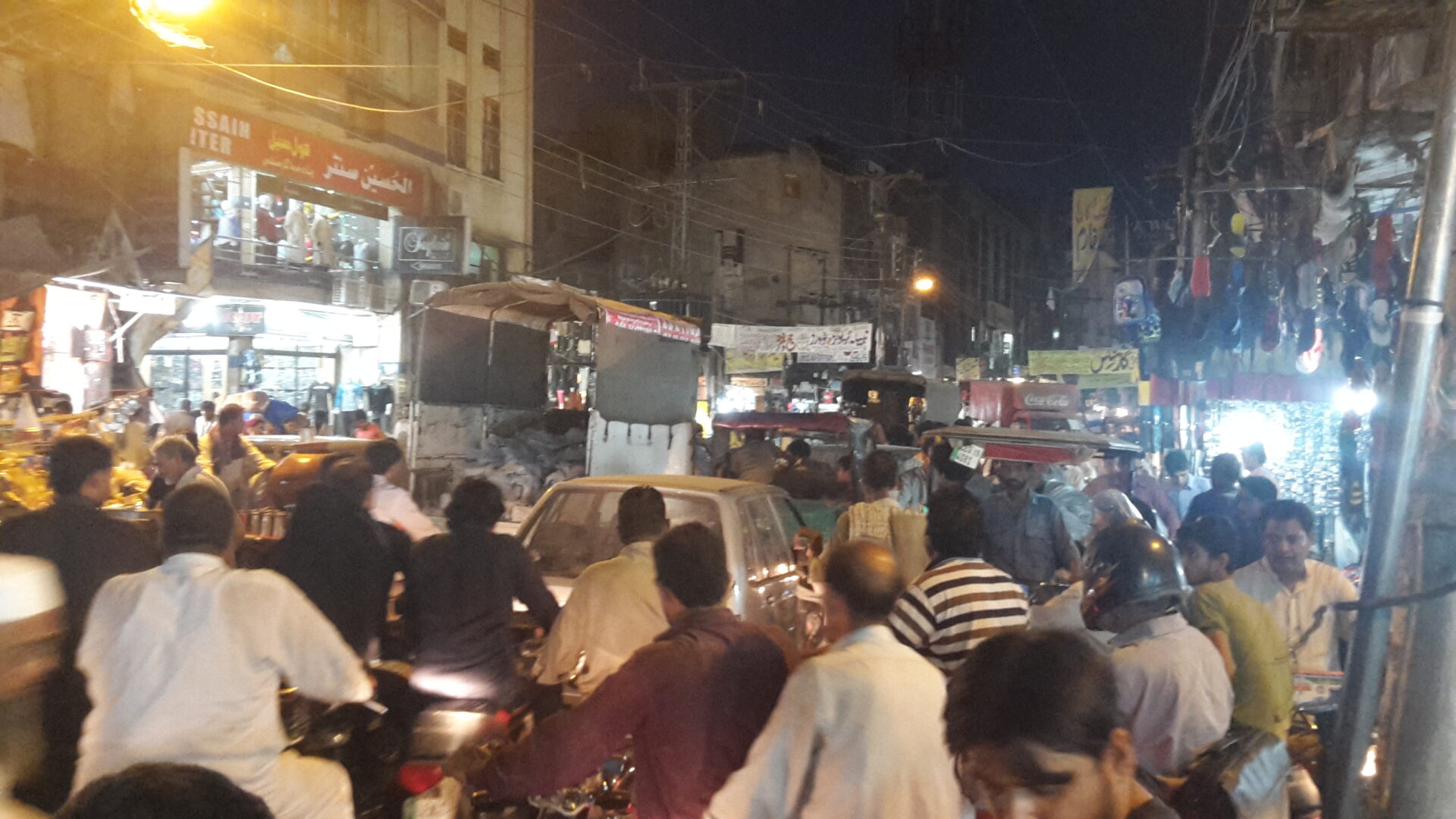
| How much is this? | Yeh kitne ka hai? | The most useful shopping phrase |
| That is too expensive | Yeh bohat mehnga hai | Say it with a smile when bargaining |
| Please reduce the price | Thora kam kijiye | Polite way to bargain |
| I will think about it | Main soch kar bataunga (m) / bataungi (f) | Good way to step away |
| I like this | Mujhe yeh pasand hai |
Phrases for food and drink
| English | Roman Urdu | Notes |
|---|---|---|
| Water | Pani | Ask for bottled water if you prefer it |
| Tea | Chai | Often served with milk and sugar |
| Less spicy, please | Mirch kam, meherbani | “Mirch” means chilli |
| No sugar | Cheeni nahin | |
| The bill, please | Bill dijiye | “Hisaab” also means bill |
| I am vegetarian | Main sabzi khata hoon (m) / khati hoon (f) | Explain clearly, as meat is often used in many dishes |
Phrases for transport and directions
| English | Roman Urdu | Notes |
|---|---|---|
| Where is…? | … kahan hai? | Say the place name first |
| I want to go to… | Mujhe … jana hai | |
| Stop here, please | Yahan rok dijiye | Useful with taxi and rickshaw drivers |
| How long will it take? | Kitna waqt lagega? | |
| Straight, left, right | Seedha, ulte haath, seedhe haath | |
| Is it far? | Kya yeh door hai? |
Phrases for emergencies and help
| English | Roman Urdu | Notes |
|---|---|---|
| Help me, please | Meri madad kijiye | |
| I need a doctor | Mujhe doctor chahiye | |
| I do not understand | Mujhe samajh nahin aaya | Useful for any situation |
| Do you speak English? | Kya aap angrezi bolte hain? | |
| Call the police | Police ko bulayein | Police is 15; Rescue 1122 for ambulance and rescue |
Numbers one to ten
Aik (1), do (2), teen (3), chaar (4), paanch (5), chhe (6), saat (7), aath (8), nau (9), das (10). Knowing these helps with prices, bus numbers and taxi fares, though many sellers will happily switch to English numbers.
Pronunciation and usage tips
- Speak slowly and clearly; people appreciate the effort more than perfect accuracy.
- Add “ji” after a name or title as a polite touch, as in “Ahmed ji”.
- Use your right hand when giving or receiving items, which is a common courtesy.
- Verb endings change for male and female speakers, so use the form that matches you.
- Pair phrases with a smile and a short pause, since tone matters as much as words.
Respect and etiquette when using local phrases
Greet before you ask for anything, and use polite forms with elders. Men and women often greet differently in conservative areas, so follow the other person’s lead on handshakes. For more on respectful behaviour, see our tips for first-time visitors and our guide on what to wear in Pakistan.
Frequently asked questions
Do I need to speak Urdu to travel in Pakistan?
No. English is widely understood in hotels, tourist areas and larger cities, but a few Urdu phrases make everyday interactions easier and friendlier.
What is the most useful Urdu phrase for travelers?
“Assalam-o-alaikum” for greetings and “yeh kitne ka hai?” for prices.
How do you say thank you in Urdu?
“Shukriya” is the most common way, and “meherbani” is also widely used.
What languages are spoken in northern Pakistan?
Urdu works widely, but local languages include Shina, Balti, Burushaski and Khowar, depending on the valley.
Is it polite to bargain in Pakistan?
In bazaars and with many street sellers, yes, but keep it friendly. Fixed-price shops, restaurants and hotels do not bargain.
Conclusion
Learning a handful of Urdu phrases for travelers in Pakistan costs little and earns real goodwill. Start with greetings, prices and directions, then add food and transport phrases as you travel, and let a smile do the rest.