








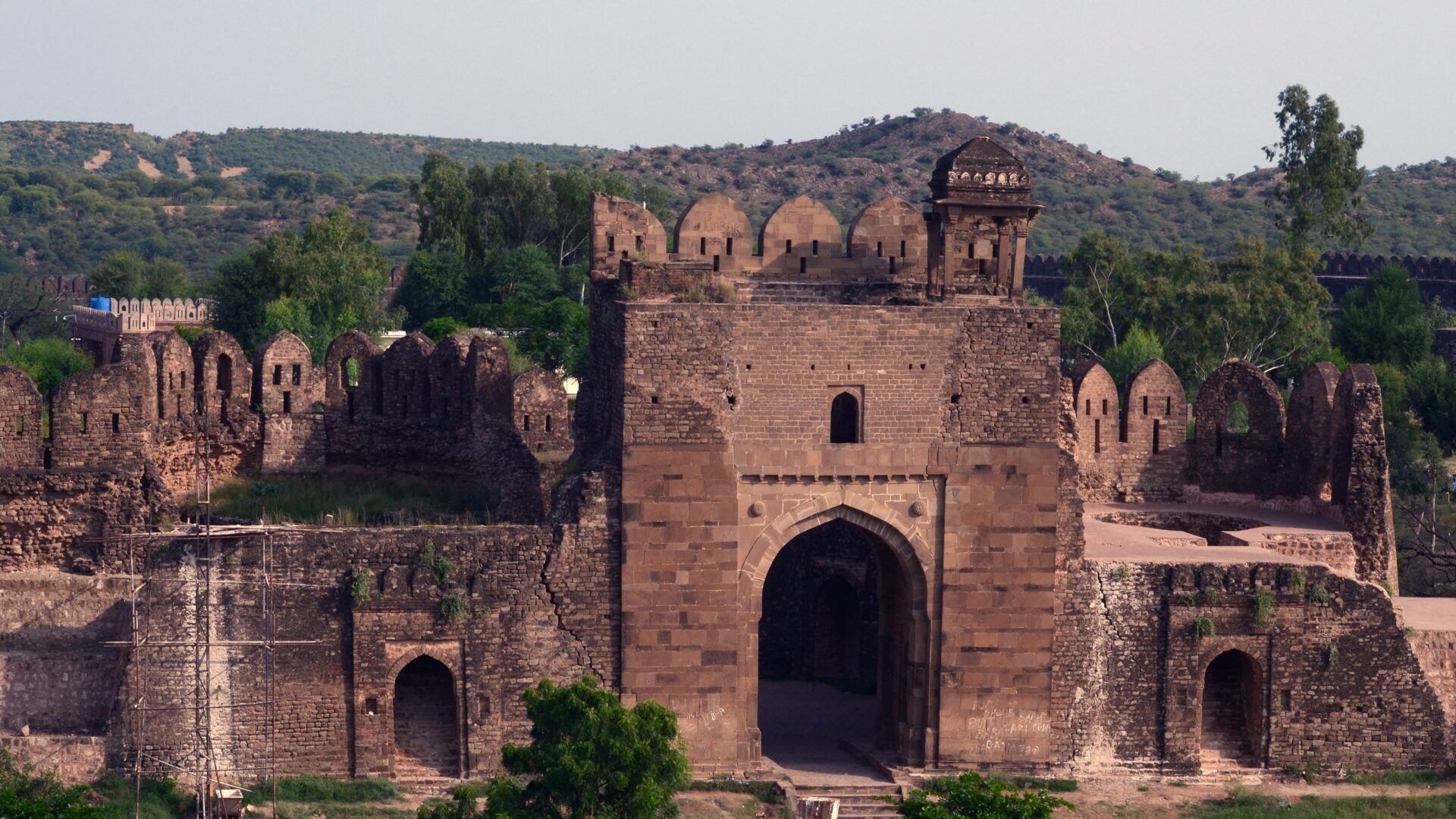
Rohtas Fort is a 16th-century fortress near Dina in Jhelum District, Punjab. Sher Shah Suri began building it in 1541, and UNESCO listed it as a World Heritage Site in 1997. This Rohtas Fort travel guide covers its history, the twelve gates, how to reach it from Islamabad and Lahore, costs reported by recent visitors, and a simple plan for a day trip.
Quick answer: what is Rohtas Fort?
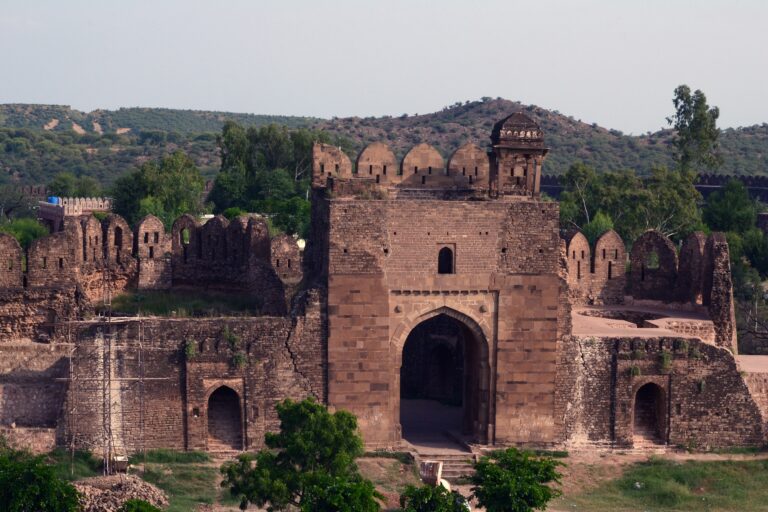
Rohtas Fort, also called Qila Rohtas, is a large military fortress on a hill in the Tilla Jogian range. Sher Shah Suri ordered it after his victory over the Mughal emperor Humayun, partly to control the Gakhar tribes of the Potohar region. It was never taken by assault, so much of its stonework and many of its gates survive. A village still occupies part of the site, which makes it a living fort rather than an empty ruin. Plan two to three hours for a visit.
Rohtas Fort quick facts
| Detail | Rohtas Fort |
|---|---|
| Location | Near Dina, Jhelum District, Punjab |
| Built by | Sher Shah Suri, founder of the Sur dynasty |
| Construction | Began in 1541; Sher Shah died in 1545 before it was finished |
| UNESCO listing | 1997, as an exceptional example of early Muslim military architecture |
| Gates | Twelve |
| Wall length | About 4 km around |
| Managed by | Directorate General of Archaeology and Museums, Government of Punjab |
| Distance from Islamabad | Roughly 110 to 115 km, about 2 hours by road |
| Distance from Lahore | Roughly 200 to 220 km, about 4 hours by road |
| Best season | October to March |
| Suggested time on site | 2 to 3 hours |
Where is Rohtas Fort?
Rohtas Fort stands in Dina tehsil, Jhelum District, in northern Punjab. It sits on a hill where the Kahan River meets a seasonal stream called Parnal Khas. The fort lies roughly 8 to 10 km from Dina and about 20 km from Jhelum city, reached by a side road off the Grand Trunk (GT) Road. Published distances differ by a few kilometres depending on the route, so treat them as approximate.
The site marked the north-western edge of Sher Shah’s empire and overlooked the road between Afghanistan and the plains of north India.
History of Rohtas Fort
Sher Shah Suri defeated Humayun and took power in northern India in the 1540s. Rohtas was meant to hold the Potohar region and block any Mughal return. The Gakhars, who stayed loyal to Humayun, refused to submit, and the fort was meant in part to suppress them. Historical accounts credit Todar Mal, Sher Shah’s finance minister, with the planning and management of the work.
The name was borrowed from Rohtasgarh in Bihar, which Sher Shah had captured in 1539. The two forts are unrelated apart from that link.
Sher Shah died in 1545, and the fort was unfinished. Humayun then returned to reclaim Punjab. Later the Mughal emperor Akbar reportedly stayed at Rohtas for only a single night, and in the 1580s he built Attock Fort, which suited Mughal interests better. Under Durrani rule the fort had a governor, and Charat Singh, grandfather of Ranjit Singh, later captured it. Its walls, bastions and gates were seldom tested in real sieges, which is why so much remains.
How to reach Rohtas Fort
Most visitors come by road. There is no public transport to the gate, so the last stretch needs a taxi, rickshaw or your own vehicle.
Nearest airport
Islamabad International Airport is the practical choice, followed by Lahore’s Allama Iqbal International Airport. Neither is close. Expect about two hours by road from Islamabad and about four from Lahore. See our guide to Pakistan’s international airports.
Nearest railway station
Dina and Jhelum both have stations on the main line, and trains from Lahore, Rawalpindi and Karachi stop at them. Dina is closer to the fort. Check current timetables with Pakistan Railways before travelling.
Road access
- From Islamabad or Rawalpindi: take the GT Road (N-5) towards Jhelum and turn off for Dina and Rohtas Fort. The drive is about 2 to 2.5 hours.
- From Lahore: use the M-2 Motorway and then the GT Road, or the GT Road alone. Allow around 4 hours.
- From Jhelum city: about 35 minutes.
Intercity coaches run between Lahore, Islamabad and Jhelum, and the nearest stop is at Dina. A rickshaw from Dina to the fort was reported at 600 to 800 PKR. Our public transport guide explains the coach and rail options.
Best time to visit Rohtas Fort
October to March is the most comfortable period for walking the walls. Autumn brings clear skies, and winter days are mild for a full day outdoors. The Potohar plateau gets hot in summer, and the fort offers little shade, so avoid midday visits from late April onwards. Monsoon rain can make steps and paths slippery. Our best time to visit Pakistan guide covers the wider seasons.
Weather at Rohtas Fort
Conditions are similar to Jhelum and Islamabad. Winters are cool and dry, summers are hot, and the monsoon brings rain and humidity. Check a forecast the day before you leave, because the site is almost entirely open-air.
Places to visit at Rohtas Fort
The fort is spread over a large area, so most visitors focus on the gates and the main central structures. The twelve gates are the main attraction, and each has a different name and character.
| Gate | What to know |
|---|---|
| Sohail Gate | Often cited as the finest example of Sur masonry. It is named after a saint interred at its base. |
| Shishi Gate | Shows early glazed tilework, a craft later refined in Lahore. |
| Kabuli Gate | One of the best-known gates and a popular photo stop. |
| Khwas Khani Gate | Named after one of Sher Shah’s generals. Reported as the main entrance from the old GT Road. |
| Shah Chandwali Gate | The only link between the main fort and the inner citadel area. |
| Gatali Gate | A single gate that opens towards Gatali village, a crossing point on the Jhelum River. |
| Talaqi Gate | Stands on the northern edge, near Gurdwara Chowa Sahib. |
The other five are Langar Khani, Mori (Kashmiri), Tulla Mori, Pipli and Sar Gate. Beyond the gates, look for the central stepwell (baoli), the Hindu temple and the gurdwara. A small museum on site is reported to display Suri and Mughal-era coins. Confirm what is open on the day.
Lesser-known details to look for
- Trap gates and stepwells. Local government descriptions of the fort mention trap gates and baolis as part of its defences.
- Ashlar masonry. The gates use cut stone laid in neat courses, which you can study up close.
- The village. Over a third of the fort area is occupied by Rohtas village, inhabited for centuries.
Things to do at Rohtas Fort
- Walk the line of gates and compare their styles, starting with Sohail and Shishi.
- Climb to the viewpoints on the walls for the view over the Kahan River and the surrounding hills.
- Hire a guide at the ticket counter. Visitors report about 1,000 PKR for an hour and 1,500 PKR for 90 minutes.
- Visit the stepwell, the temple and Gurdwara Chowa Sahib near the Talaqi Gate.
- Walk through the village lanes, with permission and respect for residents.
Adventure activities
Rohtas is a walking site, not an adventure destination. The wall circuit is long, and a full circuit needs a full day and good fitness. Golf carts with drivers were reported at about 2,000 PKR per hour for covering distance quickly.
Photography spots
- Sohail Gate and Kabuli Gate. The cut-stone facades photograph well in morning or late-afternoon light.
- Wall walkways. Good for wide shots of the hills and the Kahan River valley.
- Stepwell and courtyards. Soft light inside makes these easier to shoot at midday.
Ask before photographing residents, especially women and children. Drones may need permission, so check with the site management first.
Where to stay near Rohtas Fort
Most travellers visit as a day trip. Accommodation close to the fort is limited, and Jhelum city has the nearest hotels. Many visitors base themselves in Islamabad or Rawalpindi, or stop here between Islamabad and Lahore. See best hotels in Islamabad or best hotels in Lahore. Confirm availability and prices directly with the hotel.
What to eat near Rohtas Fort
Dina has small local eateries and shops, and the GT Road has many roadside restaurants. Carry water and snacks for the fort itself, because food options inside are limited. For wider ideas, read our food lover’s guide to Pakistan.
Transportation around Rohtas Fort
| Option | Best for | Notes |
|---|---|---|
| Private car or hired driver | Day trips from Islamabad or Lahore | Most flexible. Agree on waiting time in advance. |
| Coach to Jhelum or Dina, then taxi or rickshaw | Budget travellers | Nearest coach stop is Dina, then about 8 to 10 km to the fort. |
| Train to Dina or Jhelum | Rail travellers | Check current timetables, then take a taxi or rickshaw. |
| Golf cart inside the fort | Covering distance on site | Reported at about 2,000 PKR per hour. |
Estimated costs (PKR)
The figures below come from recent traveller reports, not an official price list. Confirm them at the gate.
| Item | Reported cost |
|---|---|
| Entry, foreign visitors | About 500 PKR |
| Entry, Pakistani visitors | About 20 PKR |
| Local guide | About 1,000 PKR per hour |
| Golf cart with driver | About 2,000 PKR per hour |
| Rickshaw from Dina | 600 to 800 PKR |
Fuel, tolls and meals depend on your starting point, so check them before you go. Our Pakistan travel cost guide helps with the wider budget.
Packing checklist
- Sturdy walking shoes with grip for uneven stone steps
- Hat, sunscreen and sunglasses
- At least 1.5 litres of water per person
- Light layers in winter, light cotton in warm months
- Modest clothing that covers shoulders and knees
- Cash in small notes for tickets, guides and rickshaws
- Power bank and offline map
Travel tips
- Go early. The site is large and exposed, and morning light suits the stonework.
- Take a guide. The layout is spread out, and a guide explains which gate is which.
- Families. Children can enjoy the gates and walls, but watch them near edges and steps.
- Solo travellers. The site is popular with day visitors, so it is manageable alone. Share your plans with someone and keep to daylight hours.
- Budget. A shared taxi or coach plus rickshaw keeps costs low, but it takes longer.
- Cash. Carry enough before you leave Islamabad, Lahore or Jhelum. See our ATM and cash guide.
Safety tips
- Wear shoes with grip. Stone steps and ramps can be uneven and slippery after rain.
- Drink water regularly and avoid long walks in the midday sun.
- Keep to marked or commonly used paths and be careful near wall edges.
- Check road and security conditions before you travel, using official sources. Our safety guide explains how to do that.
Responsible tourism
- Do not climb on or write on historic stonework.
- Take your rubbish with you.
- Dress modestly and be quiet near the gurdwara, the temple and the village.
- Respect residents’ privacy and do not enter homes without invitation.
- Hire local guides and buy from local sellers where you can.
Emergency contacts near Rohtas Fort
- Police: 15
- Rescue 1122 (Punjab): 1122
- Confirm the numbers locally before you travel. The nearest hospitals and larger facilities are in Jhelum.
Attractions near Rohtas Fort
- Jhelum city and the GT Road. The usual base for travellers on this route.
- Khewra Salt Mine. Also in the Jhelum region. See our Khewra Salt Mine guide.
- Rawalpindi. Read about historic Rawalpindi.
- More forts. Compare it with Derawar Fort, Ranikot Fort and our overview of forts in Pakistan.
- Other heritage sites. See UNESCO heritage sites in Pakistan and historical places in Lahore.
Possible one-day itinerary from Islamabad
Times are approximate and depend on traffic.
| Time | Plan |
|---|---|
| 7:30 am | Leave Islamabad or Rawalpindi on the GT Road. |
| 9:45 am | Arrive near Dina, buy water and snacks, and continue to the fort. |
| 10:15 am | Buy tickets, hire a guide and start with the gates near the entrance. |
| 12:30 pm | Rest, eat and visit the stepwell, temple and gurdwara area. |
| 2:00 pm | Walk the walls or ride a golf cart to the far gates. |
| 3:30 pm | Leave the fort and return towards Islamabad. |
| 6:00 pm | Arrive back, allowing for traffic. |
From Lahore, start before dawn or stay a night in Jhelum or Islamabad to avoid a very long day. See our Punjab travel guide for related stops.
Rohtas Fort FAQs
Who built Rohtas Fort?
Sher Shah Suri ordered it, and construction began in 1541. His finance minister Todar Mal is credited with managing the work.
Why is Rohtas Fort a UNESCO World Heritage Site?
UNESCO listed it in 1997 as an exceptional example of early Muslim military architecture in Central and South Asia.
How many gates does Rohtas Fort have?
Twelve. They include Sohail, Shishi, Kabuli, Khwas Khani, Shah Chandwali and Gatali.
How far is Rohtas Fort from Islamabad?
About 110 to 115 km, roughly two hours by road.
How far is Rohtas Fort from Lahore?
About 200 to 220 km, roughly four hours.
How much is the Rohtas Fort entry ticket?
Recent traveller reports mention about 500 PKR for foreign visitors and 20 PKR for Pakistani visitors. Confirm the current price at the gate.
How long does a Rohtas Fort visit take?
Two to three hours covers the main gates and central area. A full circuit of the walls takes much longer.
When is the best time to visit Rohtas Fort?
October to March, when the weather is cooler.
Is there a village inside Rohtas Fort?
Yes. Rohtas village occupies over a third of the fort area and has been inhabited for centuries.
Final thoughts on visiting Rohtas Fort
Rohtas Fort rewards a slow visit. Its gates, walls and village show how a 16th-century military complex was planned and how it has survived. Go in the cooler months, hire a guide, and confirm tickets and opening hours before you travel. For the official heritage record, read the UNESCO World Heritage entry for Rohtas Fort, and see the Municipal Committee Jhelum page for local background.