


















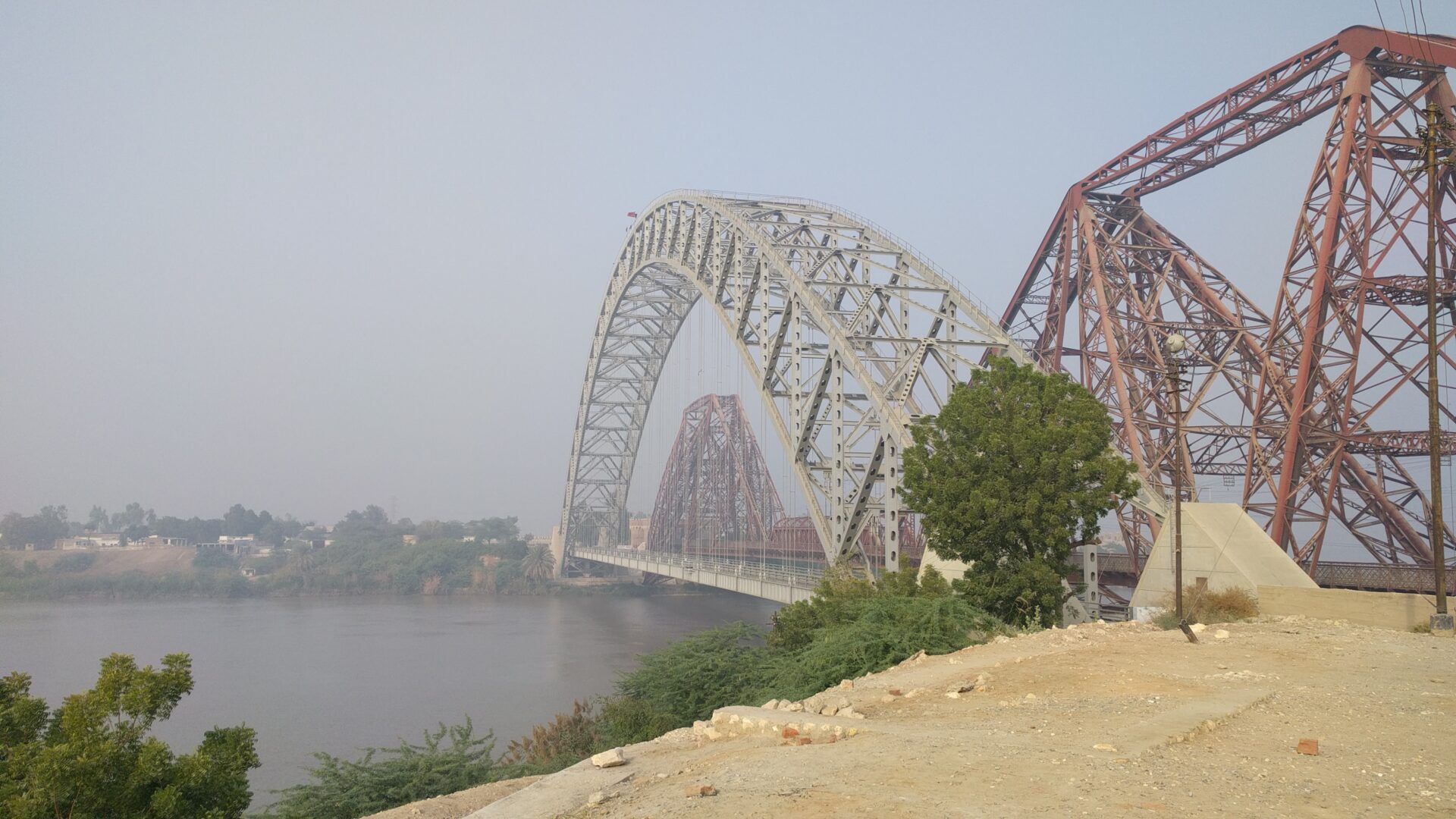

Three bridges cross the Indus at Sukkur within sight of each other: the Lansdowne Bridge of 1889, the Ayub Bridge of 1962 and, a little downstream, the Sukkur Barrage of 1932. Between them sit river islands with a Hindu temple complex and an old fort. Sukkur is also the base for day trips to Kot Diji, Khairpur and Mohenjo-daro, and the best place in Pakistan to look for the Indus River dolphin. Last checked: November 2026.
Quick answer: is Sukkur worth visiting?
Yes, for two or three days between November and February. Sukkur is the gateway to upper Sindh, with river islands, colonial engineering and Mughal monuments in one compact city. See the Lansdowne Bridge, take a boat to Sadh Belo, climb the Masum Shah minaret, then use the city as a base for Mohenjo-daro, about 80 km away, and for Kot Diji Fort and Faiz Mahal in Khairpur. Avoid May to August, when Sukkur is one of the hottest cities in Pakistan.
Sukkur quick facts
| Item | Detail |
|---|---|
| Province | Sindh |
| Location | West bank of the Indus, facing Rohri on the east bank |
| Best months | November to February |
| Summer | Extreme heat from May to August |
| Nearest airport | Sukkur Airport, with domestic flights |
| Railway | Rohri Junction and Sukkur station on the main line |
| Motorway | M-5 Multan to Sukkur |
| Main sights | Lansdowne Bridge, Sadh Belo, Masum Shah minaret, Sukkur Barrage, Bukkur island |
| Wildlife | Indus River dolphin in the reserve upstream of the barrage |
| Languages | Sindhi, Urdu, Saraiki |
History of Sukkur
Sukkur and Rohri face each other across a narrow gap where the Indus cuts through low limestone hills, a natural crossing point for traders and armies for centuries. Nearby Arore, east of Rohri, was the capital of Sindh before the Arab conquest in the 8th century.
In the Mughal period, Mir Masum Shah, a scholar and governor, raised the minaret that still stands over the old town in 1607. After the British took Sindh in 1843, Sukkur grew into a trading and administrative centre. The Lansdowne Bridge linked the railways of Sindh and Punjab in 1889, and the Sukkur Barrage, completed in 1932, turned the dry plains of Sindh into farmland.
Places to visit in Sukkur
Lansdowne Bridge and Ayub Bridge
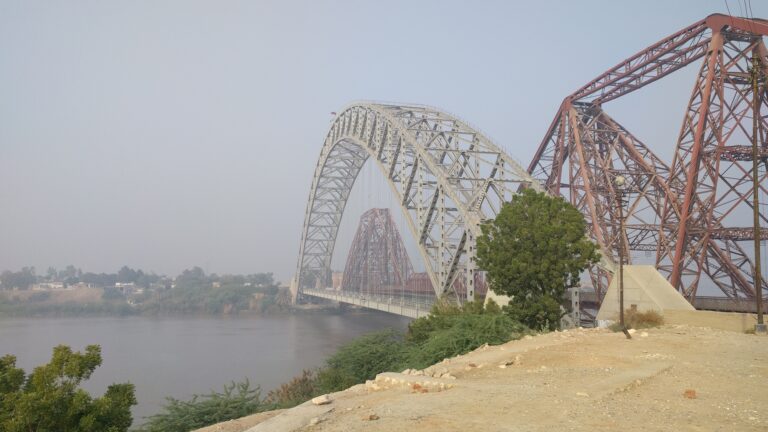
The Lansdowne Bridge opened on 25 March 1889 and was one of the largest cantilever bridges in the world when it was built. Its steel frame still crosses the river between Sukkur and Rohri, though trains moved to the Ayub Bridge next to it in 1962. The two bridges side by side make the best photo in the city, especially at sunset from the Sukkur bank.
Sadh Belo
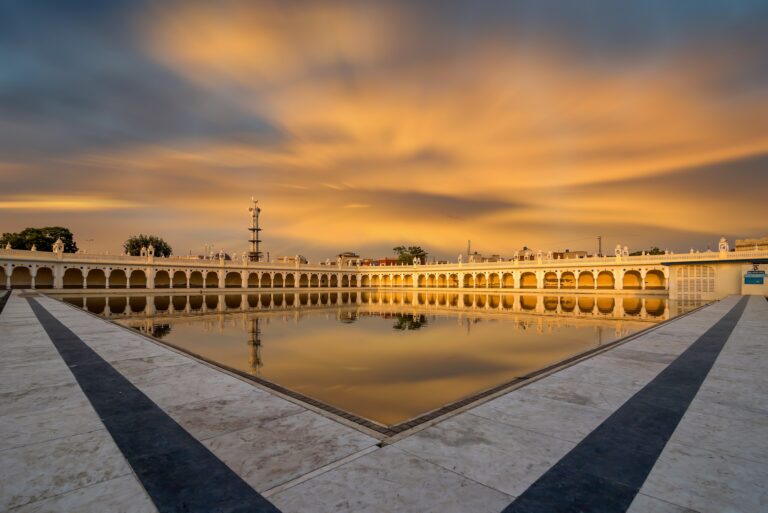
Sadh Belo is a Hindu temple complex on an island in the Indus between Sukkur and Rohri. Baba Bankhandi, an Udasi saint, settled on the island in 1823, and the temples grew around his shrine; the complex covers two linked islands with marble courtyards and silver doors. Boats cross from the Sukkur bank. Dress modestly, remove shoes where asked and follow the custodians’ instructions.
Masum Shah minaret
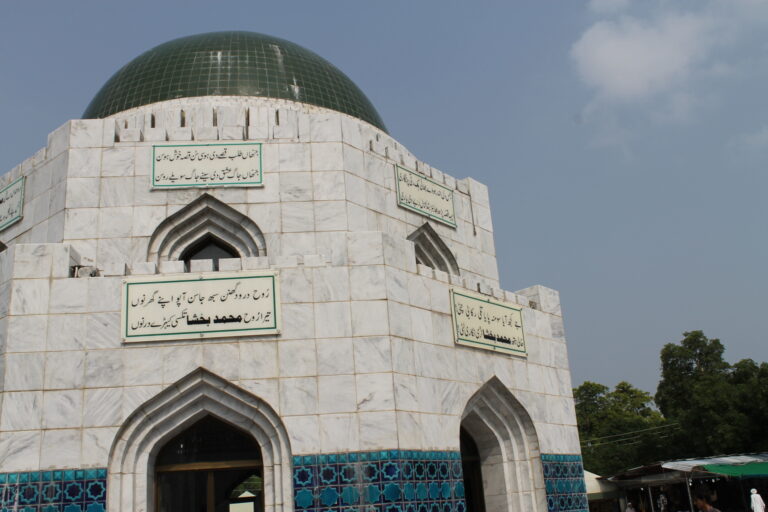
The brick minaret of Mir Masum Shah, built in 1607, rises over his family’s tombs on a hill in the old town. Climb the narrow stairs for a view of the river, the bridges and the barrage. The steps are steep and dark, so take a torch.
Sukkur Barrage
The barrage, completed in 1932 and once called the Lloyd Barrage, controls the Indus and feeds seven canals that irrigate a large part of Sindh. The river front near it is a popular evening walk.
Bukkur island
Bukkur, the island between the bridges, holds the remains of an old fort that controlled the river crossing for centuries. Ask locally about access before you go.
Satyan jo Aastan
Satyan jo Aastan, the resting place of the seven maidens, stands on the riverbank near the Lansdowne Bridge and is tied to a local legend of seven young women.
Rohri
Rohri, across the river, has old mosques and a shrine that keeps a relic believed to be a hair of the Prophet. The ruins of Arore lie a short drive east.
The Indus River dolphin
The Indus River dolphin is found only in the Indus system, and its largest population lives in the 200 km stretch between the Guddu and Sukkur barrages, declared the Indus Dolphin Reserve in 1974. A 2019 survey counted 1,419 dolphins in the reserve. They are nearly blind and surface briefly to breathe, so look for a short grey back and a splash. Ask boatmen near the barrage or the Sindh Wildlife Department about dolphin boat trips, and keep your distance from the animals. Our Indus River guide covers the wider river.
Day trips from Sukkur
| Place | Distance | Why go |
|---|---|---|
| Mohenjo-daro | About 80 km | UNESCO World Heritage Site, one of the oldest cities in the world |
| Kot Diji Fort | Khairpur District, about an hour | Talpur hill fort from the late 1700s |
| Faiz Mahal, Khairpur | Under an hour | Palace of the Talpur Mirs of Khairpur |
| Arore | Near Rohri | Ruins of the old capital of Sindh |
| Guddu Barrage | Upstream on the Indus | Dolphin reserve and river birds |
See our Mohenjo-daro guide and Kot Diji Fort guide.
How to reach Sukkur
| Route | Detail |
|---|---|
| By air | Sukkur Airport has domestic flights; check current schedules |
| By train | Rohri Junction and Sukkur are on the Karachi to Peshawar main line, with daily express trains |
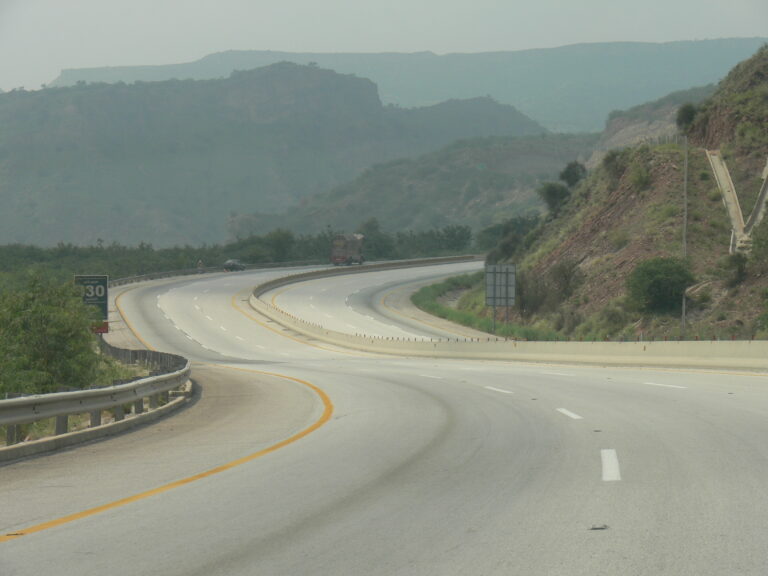
| By road from Multan | M-5 motorway, the quickest road from Punjab |
| By road from Karachi | Via Hyderabad on the M-9 and the national highway, a full day’s drive |
See our train travel guide and public transport guide.
Best time to visit Sukkur
November to February is the season, with mild days and cool nights. March is warm, and from April temperatures climb fast; May to August brings some of the highest temperatures in Pakistan. In December and January, morning fog can hang over the river.
What to eat
Sukkur sits in date country; Khairpur, next door, is one of the largest date growing areas in Pakistan, and the bazaars sell fresh and dried dates. Fried fish from the Indus, Sindhi biryani and sweet shops around the old town are the local staples. Try a Sindhi meal of saag, dal and fish with fresh bread.
Where to stay
Sukkur has business and family hotels in the city centre and along the main roads. Book a room with working air conditioning or heating depending on the season, and check reviews for cleanliness and backup power.
Two days in Sukkur
Day 1: The river
- Morning boat to Sadh Belo
- Late morning at the Masum Shah minaret
- Afternoon at Satyan jo Aastan and the river front
- Sunset at the Lansdowne and Ayub bridges
Day 2: Mohenjo-daro or Khairpur
- Early drive to Mohenjo-daro, about 80 km, and return by afternoon
- Or Kot Diji Fort and Faiz Mahal in Khairpur
Travel tips
- Visit between November and February
- Carry cash; card acceptance is limited in the old town
- Dress modestly, especially at shrines and temples
- Ask before photographing people, bridges near the barrage and official buildings
- Hire a car and driver for day trips; see our car rental guide
Frequently asked questions
What is Sukkur famous for?
The Lansdowne Bridge, the Sukkur Barrage, the Sadh Belo temple island and the Masum Shah minaret, plus the Indus River dolphins upstream.
How far is Mohenjo-daro from Sukkur?
About 80 km by road.
When was the Lansdowne Bridge built?
It opened on 25 March 1889.
Can you see Indus River dolphins at Sukkur?
Yes, with luck. The largest population lives between the Guddu and Sukkur barrages. Ask local boatmen or the wildlife department about trips.
What is the best time to visit Sukkur?
November to February. Summers are extremely hot.
How do I get from Multan to Sukkur?
The M-5 motorway is the fastest road link.
Conclusion
Give Sukkur two nights in winter. Take the morning boat to Sadh Belo, watch the sun set behind the Lansdowne Bridge, and leave early the next day for Mohenjo-daro, 80 km away, before the site gets busy.