
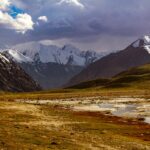
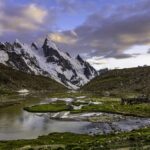
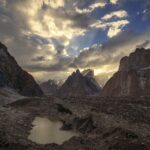
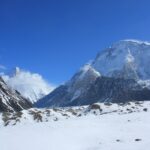
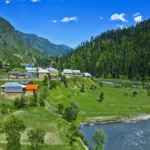
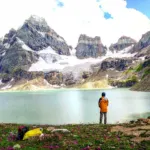
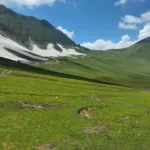







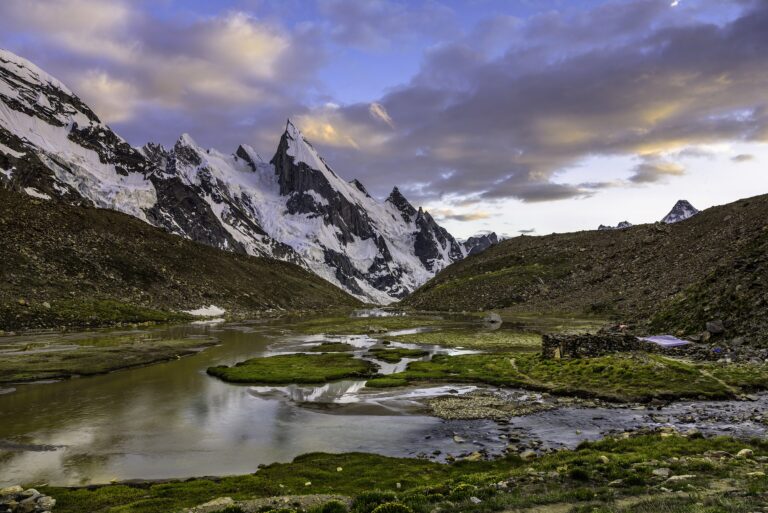
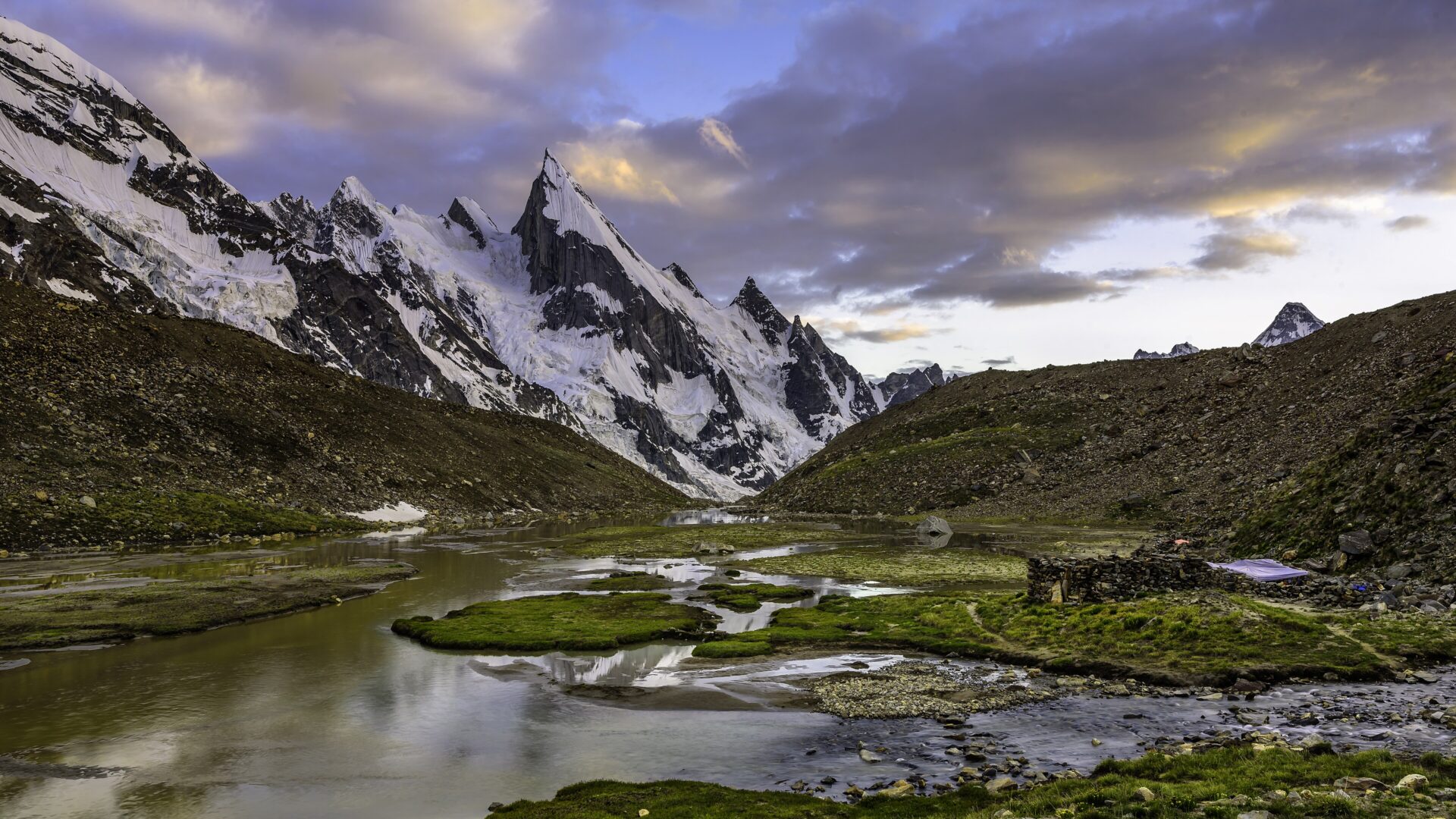
This Laila Peak travel guide covers the sharp granite spire above the Gondogoro Glacier in the Hushe Valley of Ghanche District, Gilgit-Baltistan. It is one of the most recognisable peaks in the central Karakoram and one of the best sights on the K2 and Gondogoro La route. Its height is disputed, and there are three different mountains called Laila Peak in Pakistan, so the details below refer to the Hushe peak.
Quick answer: how do you see Laila Peak?
Fly or drive to Skardu, continue to Khaplu, then take a jeep to Hushe, the last village. From Hushe you trek up the valley to Saicho and onto the Gondogoro Glacier. Short base camp treks from Hushe are offered by local operators, and trekkers on the Gondogoro La crossing also see Laila Peak along the way.
Laila Peak quick facts
| Detail | Laila Peak (Hushe Valley) |
|---|---|
| Region | Hushe Valley, Ghanche District, Gilgit-Baltistan |
| Elevation | Usually given as 6,096 m; other reports say about 6,200 m or 6,614 m |
| Setting | Beside the Gondogoro Glacier, Central Karakoram |
| Nearby peaks | Masherbrum, Mitre Peak, Gondogoro Peak, Trinity Peak |
| Winter ascent | February 2013, by two Spanish mountaineers |
| Gateway | Skardu, Khaplu, then Hushe village |
| Languages | Balti and Urdu |
| Mobile coverage | Limited in Hushe and none on the glacier; ask your operator about satellite devices |
Location
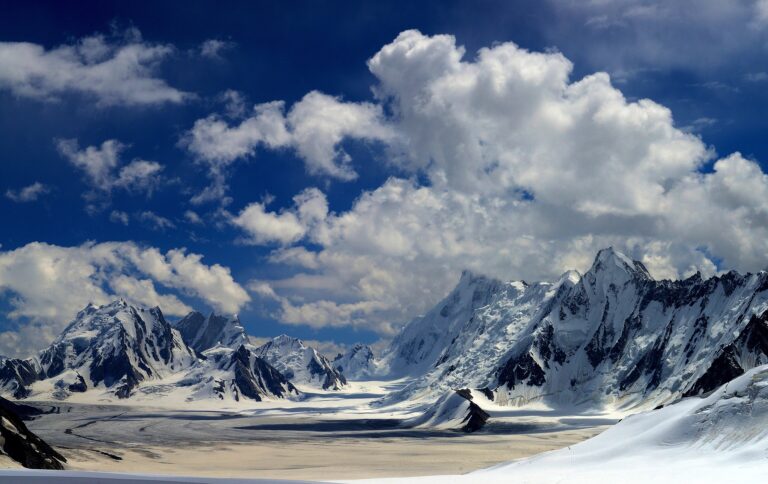
The peak stands on the Hushe side of the Gondogoro Glacier, a short walk from camps on the glacier. Other mountains named Laila Peak exist in the Haramosh Valley (about 6,985 m) and the Rupal Valley (about 5,971 m), so check the valley name when you search for photos or routes.
History
The Hushe Valley has long been a base for Karakoram climbers, and the Gondogoro Glacier route leads to Gondogoro La. According to a local operator, Laila Peak was climbed in winter in February 2013 by Alex Txikon and Jose Fernandez, and the same source says the peak has been climbed only a few times. The elevation is uncertain because a Japanese mountaineering map from 2003 gives 6,096 m while other sources give higher figures.
How to reach Laila Peak
- Nearest airport: Skardu Airport, with weather-dependent flights from Islamabad. See our domestic flights guide.
- Nearest railway station: None in Gilgit-Baltistan; Rawalpindi is the usual rail starting point.
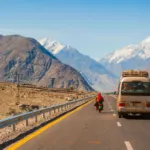
- Road access: Skardu to Khaplu, then a jeep road to Hushe. One trekking company describes about a four-hour jeep ride from Khaplu to Hushe. Our Khaplu travel guide and Hushe Valley guide cover the route.
Best time to visit and weather
Trekking is practical from roughly June to September, and conditions change quickly on the glacier. Snow and cold close the route outside summer. We do not give temperatures, because they differ strongly by altitude and day.
Places to visit and things to do
- Hushe village: the start point with homestays and local operators.
- Saicho and Khuspang camps: typical camps on the way to the glacier, where the spire dominates the skyline.
- Gondogoro Glacier: a rubble-covered glacier with long views toward Gondogoro La.
- K2 and Gondogoro La trek: see our K2 and Gondogoro La trek guide for the longer crossing.
Photography spots
Sunrise light turns the granite orange, and the glacier camps give close views. Bring spare batteries, because cold drains them. Ask guides and porters before taking portraits.
Where to stay and what to eat
Use Skardu or Khaplu for hotels, and Hushe for simple stays arranged by your operator. See our Skardu hotels guide. On trek, your operator provides meals. Local food in Baltistan is covered in our Skardu food guide.
Estimated costs
We do not publish PKR or USD figures because trek and expedition prices change widely. Ask for written quotes covering transport, guide, porters, food, camping gear, permits and insurance. See our permit fees guide.
Packing checklist
- Warm layers and a shell jacket
- Broken-in boots and trekking poles
- Sun protection, hat and gloves
- Water treatment and a basic first-aid kit
- Spare camera batteries
Travel tips
- Use a registered operator and see how to hire a guide.
- Check permit rules with our permits guide.
- Allow time to acclimatise; read the altitude sickness guide.
- Respect local customs in Hushe; see our etiquette guide.
Safety tips
- Glacier travel has crevasse and rockfall risks; walk with a guide.
- Buy insurance covering high-altitude trekking and evacuation.
- Do not attempt Laila Peak unless you are an experienced mountaineer with the right permits.
- Carry a satellite device through your operator.
Responsible tourism
Carry out all rubbish, use designated toilets and do not damage camps. Pay porters fairly and make sure they have shelter and proper clothing.
Emergency contacts
Your operator should hold current rescue and communication plans. We do not publish phone numbers because they change; confirm them before departure.
Possible itinerary
- Day 1: Arrive in Skardu and sort permits.
- Day 2: Drive to Khaplu.
- Day 3: Jeep to Hushe.
- Day 4: Trek to Saicho.
- Day 5: Continue toward Khuspang camp on the glacier for views of Laila Peak.
- Days 6 to 8: Return to Hushe and drive back to Khaplu and Skardu.
Frequently asked questions
How high is Laila Peak?
Usually 6,096 metres, though other reports give higher figures.
Where is Laila Peak?
In the Hushe Valley beside the Gondogoro Glacier. Two other Pakistani mountains share the name.
Can trekkers see Laila Peak?
Yes. It is visible from camps on the Gondogoro Glacier and on the Gondogoro La route.
When was Laila Peak first climbed in winter?
In February 2013, according to a local operator.
Do I need a permit?
Trekking and climbing need permits through a registered operator. Confirm the current rules.
Nearby attractions and related guides
Conclusion
Laila Peak rewards a short trek from Hushe with one of the best mountain views in Baltistan. Check which Laila Peak a source means, plan with a registered operator and leave summit attempts to experienced teams.
Sources and official information
Last reviewed October 2026. Permits, fees and conditions change; verify before you travel.